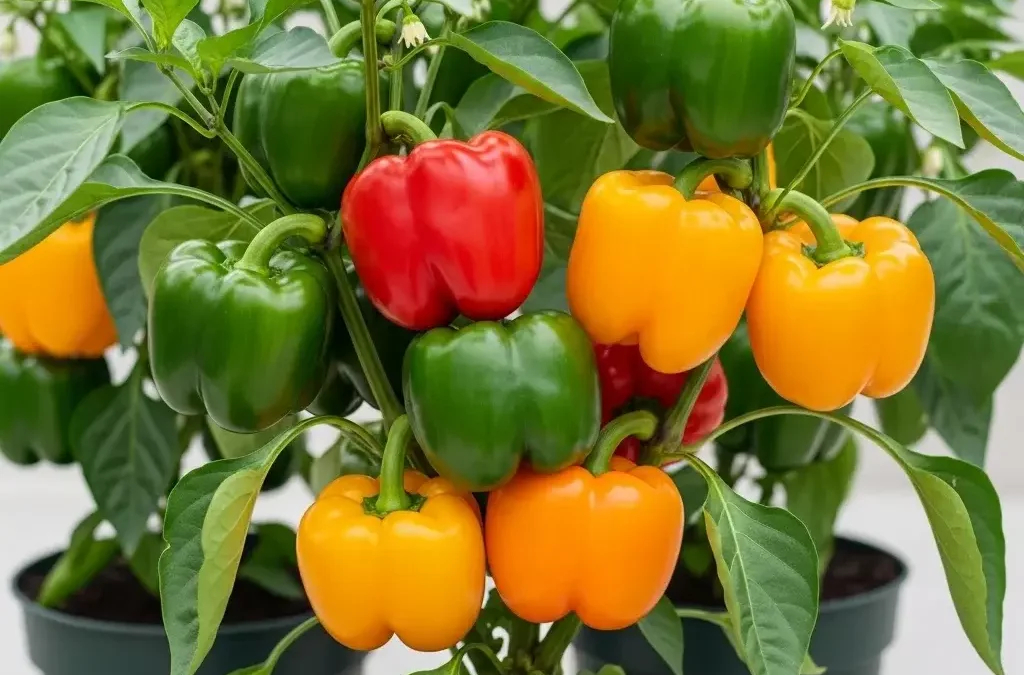
If you want success with growing bell peppers indoors, the biggest difference comes from giving them far more light than most indoor edibles, plus a warm spot, a deep pot, and a simple watering routine that keeps roots healthy. Bell peppers can grow indoors, but they are not a “low-light windowsill veg” — they need a brighter, more deliberate setup.
Contents
- 0.1 Are bell peppers worth growing indoors?
- 0.2 Best light for growing bell peppers indoors
- 0.3 Best pot and soil for indoor bell peppers
- 0.4 How to start growing bell peppers indoors from seed
- 0.5 How to water bell peppers indoors
- 0.6 Why indoor bell peppers drop flowers
- 0.7 Feeding bell peppers indoors
- 0.8 Common indoor bell pepper problems
- 0.9 Harvesting bell peppers indoors
- 0.10 FAQs About Growing Bell Peppers Indoors
- 0.11 Final Thoughts on Growing Bell Peppers Indoors
- 0.12 Related Articles
- 1 Build a Stronger Setup for Better Pepper Growth
Quick answer: growing bell peppers indoors
Give bell peppers the brightest indoor light possible or use a grow light.
Use a deep pot with drainage holes and an airy potting mix.
Keep them warm and away from cold drafts.
Water thoroughly, then let the top layer dry slightly before watering again.
Help flowers set by gently shaking the plant or brushing blooms indoors.
Do this first: If you’re serious about growing bell peppers indoors, sort the light before anything else. Weak light is the biggest reason plants stay thin, drop flowers, or never fruit properly.
If you want a simple guide to what “strong enough” indoor light really looks like, Best Lights for Indoor Gardening is the best supporting page to start with.
Are bell peppers worth growing indoors?
Yes, but only if you go in with the right expectations. Indoors, bell peppers are best for:
a small number of quality fruits
compact plants in bright spots
growing alongside other light-hungry edibles
They are less ideal if you want:
heavy harvests from weak window light
a “set it and forget it” crop
big outdoor-style yields from a shaded room
That said, if you already like growing indoor tomatoes or other fruiting plants, peppers fit that same rewarding but more setup-dependent category.
Best light for growing bell peppers indoors
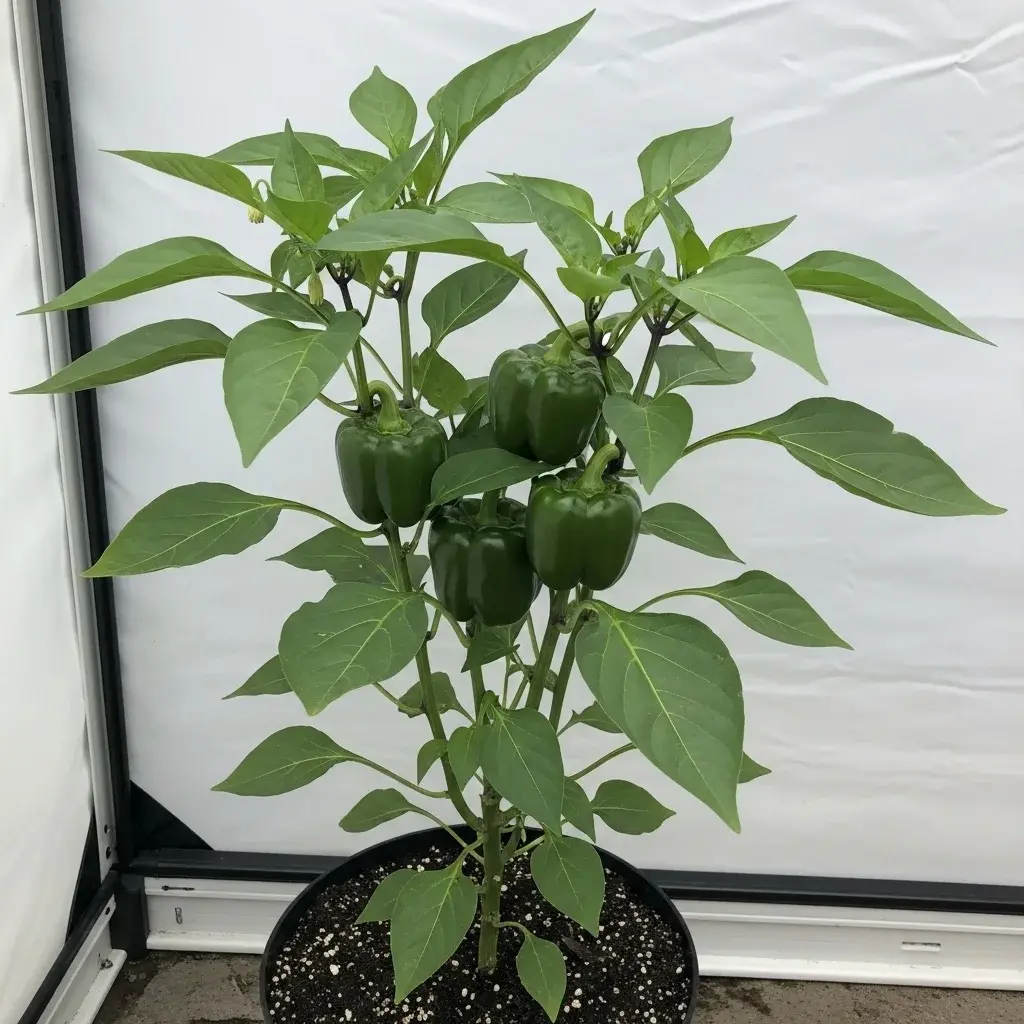
This is the most important section in the whole article. Bell peppers need strong light to:
stay compact
produce flowers
hold onto those flowers
develop decent fruit
If light is too weak, you’ll usually see:
leggy growth
pale leaves
flowers dropping
little or no fruit set
A bright windowsill can help, but for consistent fruiting, many indoor growers need added light.
A full-spectrum grow light for indoor vegetables is usually the most useful upgrade if you want better flowering and actual peppers rather than just leafy growth.
If you want another fruiting edible that needs a similarly strong setup, Grow Indoor Tomatoes is a useful related article because tomatoes and peppers share a lot of the same indoor-light challenges.
Best pot and soil for indoor bell peppers
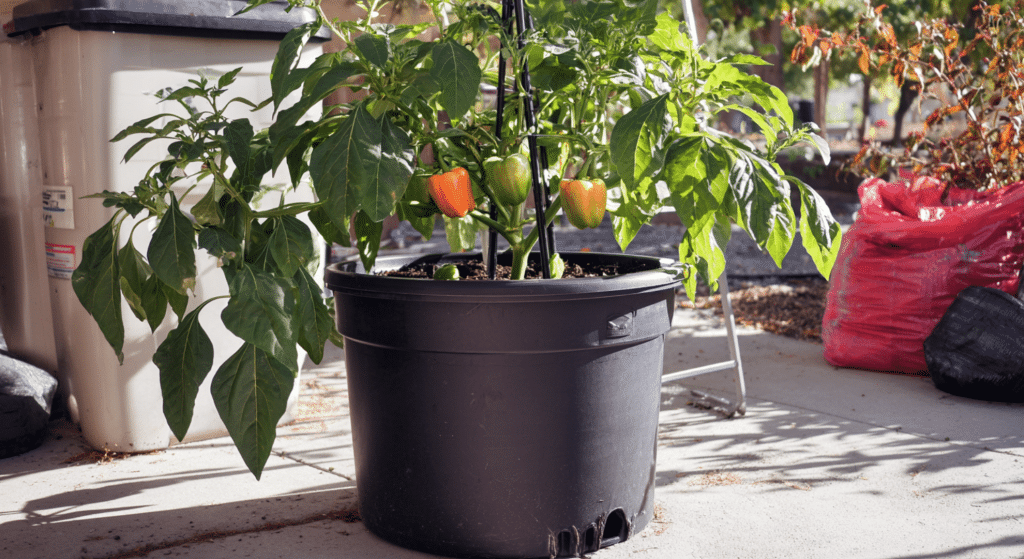
Bell peppers do not like cramped roots or muddy compost. Indoors, a good container setup usually includes:
a deep pot
drainage holes
a saucer you can empty
a loose, airy mix that drains properly
A small seedling pot is fine at the start, but once the plant grows, it needs more root room than shallow leafy crops.
If your compost stays wet for days, Improve Indoor Plant Drainage is the best supporting page because slow, soggy drying is one of the easiest ways to weaken indoor pepper plants.
A deep vegetable planter with drainage holes is a much better choice than a shallow decorative pot if you want healthy pepper roots and steadier growth.
How to start growing bell peppers indoors from seed
Bell peppers can be grown from seed indoors, but they need warmth and patience.
Simple seed-starting method
- Fill a tray or small pots with lightly moist compost.
- Sow seeds shallowly and cover lightly.
- Keep them warm and evenly moist.
- Move seedlings into very bright light as soon as they emerge.
- Pot them on once roots and top growth start filling the starter container.
Pepper seedlings often start slowly, so it helps to think ahead. The earlier you give them strong light, the stronger the plant usually becomes later.
If you enjoy starting indoor edibles from seed, Grow Beetroots Indoors and Grow Spinach Indoors are good related reads, but peppers are more demanding because they need stronger light and more warmth.
How to water bell peppers indoors
Bell peppers like steady moisture, but they hate sitting in soggy compost.
A simple watering rhythm:
water thoroughly
let excess drain away
water again once the top layer starts drying, not while the pot still feels heavy
Too wet:
yellowing leaves
weak roots
stalled growth
higher risk of fungus gnats
Too dry:
drooping
flower drop
smaller fruit
stressed plants
If you want a simpler way to stay consistent, Indoor Plant Maintenance Routine fits well here because fruiting plants indoors do better with repeat checks than random watering.
Why indoor bell peppers drop flowers
This is one of the biggest frustration points, so it deserves its own section.
Bell pepper flowers often drop because of:
weak light
cold or temperature swings
inconsistent watering
lack of pollination movement indoors
To improve fruit set:
keep the plant warm and bright
avoid letting it dry out hard
gently shake the plant or use a soft brush across flowers
That small pollination step can make a surprising difference indoors.
Feeding bell peppers indoors
Bell peppers are heavier feeders than small leafy herbs, but they still don’t need constant strong fertiliser.
A sensible approach:
let seedlings establish first
feed lightly during active growth
keep feeding steady once flowering begins
don’t overfeed in poor light
A diluted tomato and pepper liquid feed for vegetables is usually a better fit than a very general houseplant feed once the plant is established and moving toward flowering.
If you want a broader feeding guide so you don’t overdo it, How Often to Fertilize Indoor Plants helps keep the routine sensible.
Common indoor bell pepper problems
Plant is tall and floppy
Usually not enough light. Move it brighter or add a grow light.
Flowers appear, then fall off
Most often weak light, temperature stress, or inconsistent watering.
Leaves are yellowing
Usually wet compost, poor drainage, or an older plant sitting too long in tired mix.
Tiny peppers stop growing
This often points to weak light, too little feeding during fruiting, or general plant stress.
A helpful reminder here is that University of Minnesota Extension’s pepper guidance emphasises full sun, warm conditions, and steady growth for better pepper production, which is exactly why indoor bell peppers need a brighter, warmer setup than most leafy crops.
Harvesting bell peppers indoors
Harvest when fruits:
look full-sized for the plant
feel firm
have reached the colour stage you want
Green peppers can be picked earlier, while coloured peppers need longer on the plant.
Use clean snips rather than twisting hard, especially on smaller indoor plants with thinner stems.
If you like indoor edible plants that reward a more deliberate setup, Growing Blueberries Indoors is another useful related article because it targets the same “small but worthwhile harvests indoors” mindset.
FAQs About Growing Bell Peppers Indoors
Can bell peppers really grow indoors?
Yes, but they need much stronger light than many indoor edible crops. They do best in a very bright window or under a grow light.
Do indoor bell peppers need pollination?
They usually benefit from a little help, such as shaking the plant gently or brushing the flowers.
How long do bell peppers take indoors?
They are not a fast crop. Expect a longer wait than leafy greens, especially if the light is only moderate.
Can I grow bell peppers indoors all year?
Yes, but winter usually needs added light if you want good growth and fruiting.
Final Thoughts on Growing Bell Peppers Indoors
If you want success with growing bell peppers indoors, treat them like a serious bright-light crop rather than a casual windowsill herb. Focus on strong light, warm conditions, root room, and steady care. Once the setup is right, bell peppers can be one of the most satisfying edible plants to grow inside.
Related Articles
Make indoor fruiting plants easier to manage
Build a Stronger Setup for Better Pepper Growth
Bell peppers indoors become much easier when the setup is right from the start: stronger light, a deep draining pot, steady warmth, and consistent watering. Once those basics are in place, fruiting becomes far more realistic.