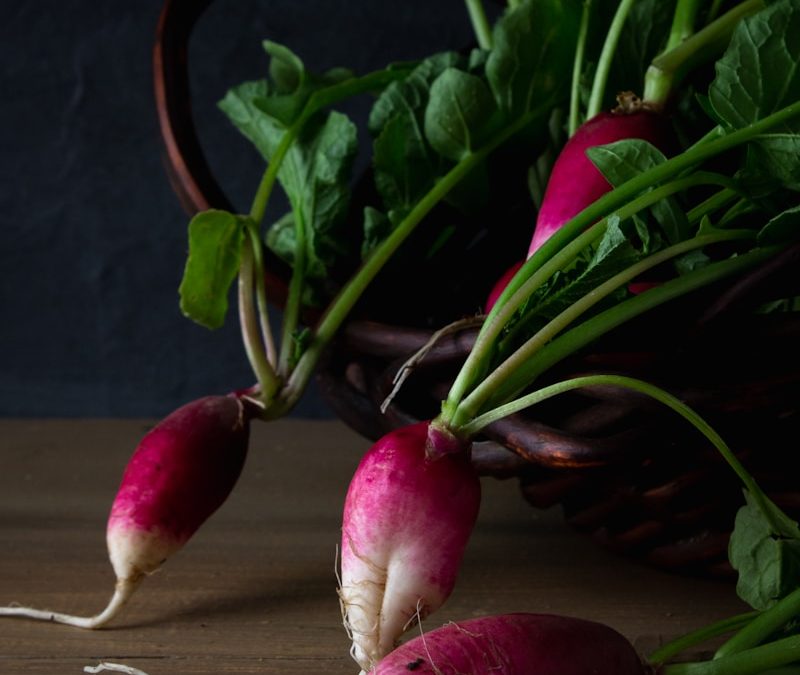
If you want to grow turnips indoors, you mainly need bright light, a deep pot, and evenly moist (not soggy) compost. Get those right and you can harvest baby turnips and peppery greens surprisingly quickly.
Quick answer: how to grow turnips indoors
Choose baby/salad turnip varieties for faster results
Use a deep container (at least 20–25cm) with drainage
Give strong light (bright window + grow light if needed)
Keep compost evenly moist, never waterlogged
Harvest greens early and pull roots when they’re golf-ball size
Do this first: Pick where your pot will live (brightest spot) and set up the light before you sow.
Contents
- 0.1 What you need to grow turnips indoors
- 0.2 Best turnip varieties for indoor growing
- 0.3 How to sow turnip seeds indoors (step-by-step)
- 0.4 Watering turnips indoors (the simple routine)
- 0.5 Feeding: do turnips need fertiliser indoors?
- 0.6 How long do indoor turnips take to grow?
- 0.7 Common indoor turnip problems (and fast fixes)
- 0.8 Long-tail quick wins (extra indoor turnip questions)
- 0.9 Final Thoughts on Growing Turnips Indoors
- 0.10 Related Articles
- 1 Get Better Results From Containers
What you need to grow turnips indoors
Turnips are a root crop, so indoors they do best when you remove the common blockers: not enough light, shallow pots, and wet compost.
Container (depth matters)
Aim for 20–25cm deep minimum for salad turnips (deeper is fine).
Make sure there are proper drainage holes.
A breathable container can help avoid soggy compost indoors. A wide fabric grow bag is a simple option that works well for indoor root crops.
Compost
Use a light, free-draining compost (not heavy garden soil).
If your mix stays wet for ages, add perlite or choose a lighter potting mix next time.
Light
Turnips will survive in lower light, but they won’t form nice roots. If your seedlings stretch tall and pale, it’s almost always a light problem.
A shelf-style option that’s easy indoors is a LED grow light bar above the pot.
Best turnip varieties for indoor growing
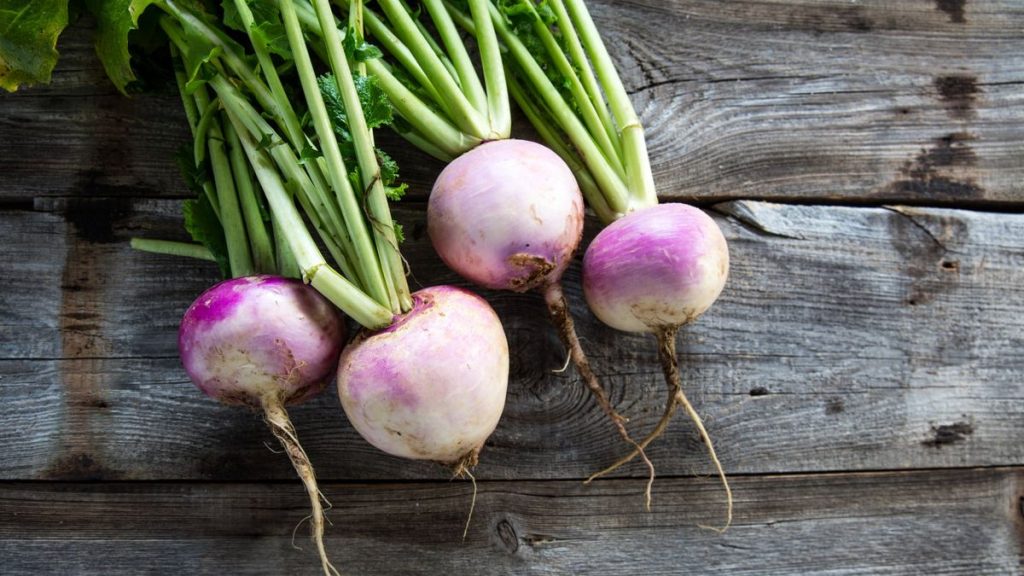
Indoors, you want quick, small-rooted types rather than huge field turnips.
Good indoor-friendly options (look for these phrases on seed packets):
Salad turnip / baby turnip
Early / quick-maturing
Small round roots
Avoid anything marketed as “maincrop” or very large roots until you’ve nailed the light and pot setup.
How to sow turnip seeds indoors (step-by-step)
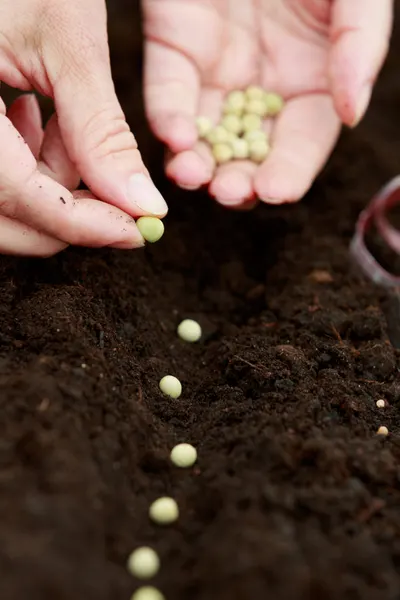
Turnips don’t love root disturbance, so the simplest indoor method is sowing directly into the final pot.
- Fill the pot and water the compost so it’s damp (not dripping).
- Sow seeds about 1cm deep.
- Space them out roughly 2–3cm apart (you’ll thin later).
- Keep warm and bright until germination.
Once seedlings appear:
Thin to leave the strongest plants.
For roots: final spacing is usually 8–10cm apart (bigger spacing = bigger turnips).
Watering turnips indoors (the simple routine)
Turnips like steady moisture, but soggy compost causes weak growth and rot.
Watering routine that works:
Water until a little drains out
Empty the saucer after 10–15 minutes
Water again when the top couple of centimetres feels just drier (not bone dry)
If you want a simple weekly checklist so watering stays consistent, this routine helps a lot: Indoor Plant Maintenance Routine.
Feeding: do turnips need fertiliser indoors?
Turnips don’t need heavy feeding. Too much nitrogen can give you huge leaves and disappointing roots.
Use this simple approach:
If you’re using fresh compost, you may not need anything for baby turnips.
If growth is slow after a few weeks, use a mild, balanced liquid feed at low strength (not every watering).
How long do indoor turnips take to grow?
This depends on variety and light, but a realistic indoor expectation is:
Greens: often ready to start picking in 3–5 weeks
Baby turnips: often ready in 6–10 weeks
Harvesting earlier is usually tastier indoors.
Common indoor turnip problems (and fast fixes)
Leaves are tall, pale, and floppy
That’s not enough light.
Fix: Move closer to the brightest window you have and/or add a grow light above the pot. Keep the light fairly close (without heating the leaves).
Turnips stay tiny or never form
Usually light + spacing.
Fix: Thin properly so each plant has room, and increase light intensity.
Plants “bolt” (send up a flower stem)
This can happen when plants get stressed (temperature swings, stop-start watering). The RHS explains bolting as premature running to seed in vegetables.
Fix: Keep conditions steadier and harvest earlier next time.
(Outbound link to use in your article sentence above): RHS bolting guide:
Compost smells sour or stays wet
That’s poor drainage or overwatering.
Fix: Empty any standing water from the saucer, water less often, and use a lighter, faster-draining mix next time. If you’re getting that swampy smell regularly, Why Indoor Plant Soil Smells Bad breaks down the most likely causes.
Long-tail quick wins (extra indoor turnip questions)
Can you grow turnip greens indoors without growing roots?
Yes. Sow a bit thicker, keep light strong, and harvest leaves young and often. It’s one of the easiest ways to get value even if roots are slow.
How to harvest baby turnips (so they taste better)
Harvest when roots are small and tender (often golf-ball size). Overgrown turnips get tougher and stronger tasting indoors.
Why are my turnip leaves yellow indoors?
Most often:
Too wet (roots not getting oxygen)
Not enough light
Compost has been used up
Fix the watering routine first, then improve light.
What if the roots are woody or bitter?
That’s usually slow growth (low light) or harvesting too late. Increase light and harvest earlier.
Final Thoughts on Growing Turnips Indoors
If you keep light strong, use a deep pot, and stick to a steady watering routine, indoor turnips become a reliable “small harvest” crop you can repeat through the year. Start with baby varieties, harvest earlier than you think, and treat the greens as a bonus that makes the whole grow feel faster.
Related Articles
INDOOR VEG MADE SIMPLE
Get Better Results From Containers
Most indoor veg problems come down to the basics: drainage, watering rhythm, and where you place the pot. Use a simple setup that stops soggy compost and helps roots actually form.