To grow indoor tomatoes, you need more light than most people expect, plus steady watering and a bit of help with pollination. Get those three right and you can harvest real fruit indoors — even in a small space.
Contents
- 0.1 Picking the best tomato type for indoors
- 0.2 Light requirements for indoor tomatoes
- 0.3 Pot size, soil, and drainage that prevents sulking
- 0.4 Watering indoor tomatoes without overdoing it
- 0.5 Feeding indoor tomatoes so they flower and fruit
- 0.6 Hand pollination indoors (the step people skip)
- 0.7 Quick fixes for common indoor tomato problems
- 0.8 FAQs About Growing Indoor Tomatoes
- 0.9 Final Thoughts on Growing Indoor Tomatoes
- 0.10 Related Articles
- 1 Get Light Placement Right for Better Harvests
Quick answer: grow indoor tomatoes
Choose compact/dwarf or determinate varieties for indoor spaces.
Give very bright light (a sunny window is rarely enough on its own).
Use a large pot with drainage and an airy veg-friendly mix.
Water deeply, then let the top layer dry slightly before watering again.
Hand-pollinate flowers indoors for better fruit set.
Do this first: Pick the variety and decide where the light will come from (window + supplemental light or full grow light). Everything else depends on that.
If you want a simple “what works indoors” overview for edible crops, Indoor Edible Plants is a good next read.
Picking the best tomato type for indoors
The variety choice is what makes indoor tomatoes feel “easy” instead of frustrating. Indoors, you usually want plants that stay smaller and fruit reliably in containers.
Good indoor-friendly options (type, not brand):
Dwarf/compact tomatoes (bred to stay short)
Determinate (bush) tomatoes (reach a set height, then focus on fruit)
Cherry tomatoes (often more forgiving and productive indoors)
Avoid for most homes:
very tall indeterminate varieties unless you have strong lights and vertical space
Light requirements for indoor tomatoes
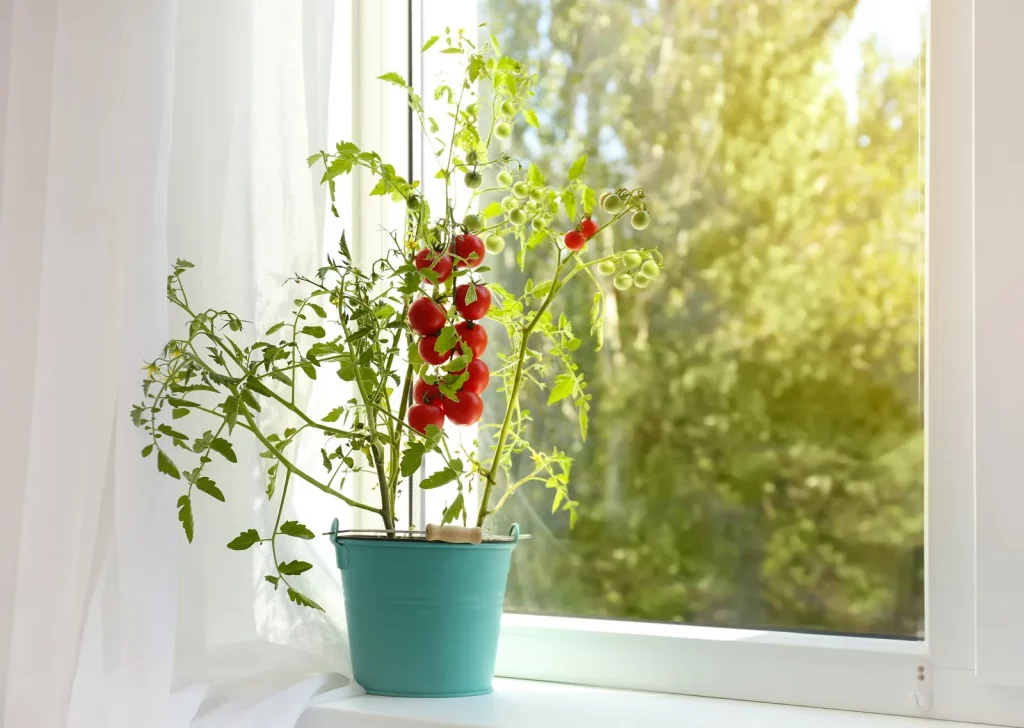
Tomatoes are high-light plants. When light is too weak, you’ll see leggy stems, pale leaves, and lots of leafy growth with poor flowering.
A simple indoor light rule:
More light = better flowering and fruiting
If your plant is stretching, it’s almost always a light problem.
For a clear breakdown of light levels and what to buy (without overcomplicating it), Best Lights for Indoor Gardening makes the choice easier.
If your room is dim or winter light is weak, a high-output full-spectrum LED grow light panel can be the difference between “green plant” and “actual tomatoes”.
Tomatoes really are a “full sun” crop — Cornell’s tomato growing guide notes they typically need at least 8 hours of direct sun daily, which is why indoor setups usually benefit from very bright placement or supplemental lighting.
Pot size, soil, and drainage that prevents sulking
Indoor tomatoes hate two extremes: soggy compost and bone-dry swings. A stable root zone is the goal.
Pot size
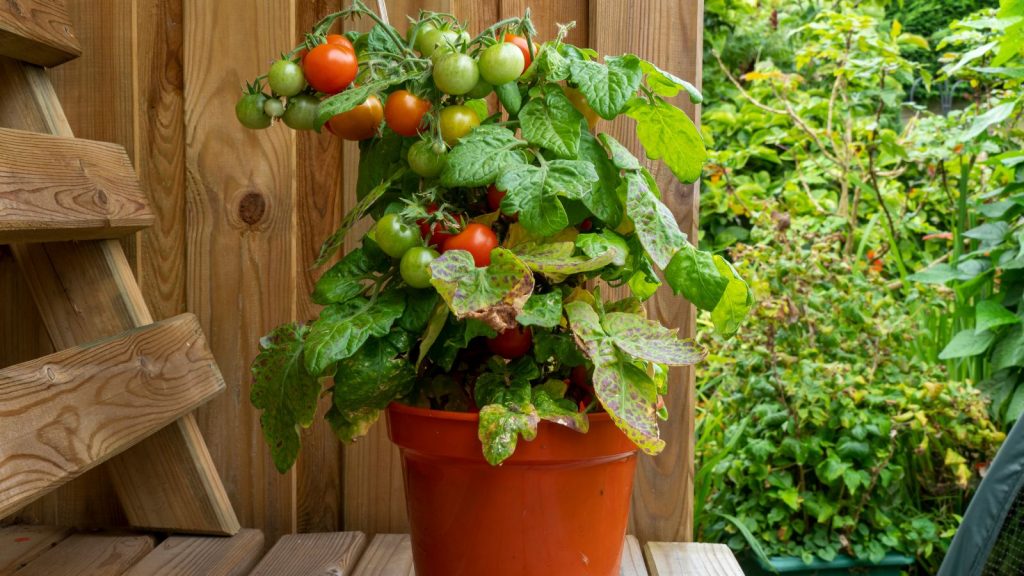
A larger pot is usually better indoors because it buffers watering mistakes.
Small pots dry too fast and cause blossom drop and split fruit.
Soil
Use a mix that holds moisture but still drains well.
Avoid dense compost that stays wet for days.
Drainage
Always use drainage holes and empty the saucer after watering.
If your pots stay wet for ages, Improve Indoor Plant Drainage is a helpful fix-it read for getting the pot setup right.
Watering indoor tomatoes without overdoing it
Indoor watering success is mostly about timing and full drainage.
A simple method:
Water thoroughly until it runs out the bottom.
Let it drain fully.
Don’t water again until the top few centimetres feel dry.
Common indoor watering mistakes:
small splashes every day (keeps the top wet but roots unhappy)
leaving water sitting in a cover pot/saucer
watering on a strict schedule instead of checking soil
If you want a quick troubleshooting checklist for watering issues, Indoor Plant Watering Mistakes is a useful reference.
Feeding indoor tomatoes so they flower and fruit
Tomatoes are hungry once they start flowering. Too much nitrogen can push leaf growth at the expense of fruit, so you want a feed that supports flowering and fruiting.
A simple feeding approach:
Start feeding once flowers appear (or when the plant is growing strongly).
Keep it consistent rather than heavy.
If the plant looks dark green and leafy but doesn’t flower, ease off strong feeding.
A high-potash liquid tomato fertiliser supports flowering and fruiting without making the plant overly leafy.
If you’d rather understand fertiliser choices before buying anything, Liquid Fertilizer explains the basics in plain English.
Hand pollination indoors (the step people skip)
Outdoors, wind and insects move pollen. Indoors, flowers can open… and then drop without setting fruit.
A fast indoor method:
Tap or gently shake the flowering stems once a day, or
Use a small soft brush or cotton bud to move pollen between flowers
Do this around midday when conditions are warmer and pollen is more active.
Quick fixes for common indoor tomato problems
Flowers drop off without fruit
Usually caused by:
low light
temperature swings
dry/wet stress
lack of pollination
Fix:
improve light, keep watering steadier, hand-pollinate daily during flowering.
Leggy seedlings
This is almost always not enough light.
Fix:
move closer to the brightest spot you have, and use a grow light if needed.
Leaves curl or look stressed
Often watering swings or heat blasts from radiators.
Fix:
stabilise watering, move away from hot air, keep airflow gentle.
Fruit won’t ripen
Ripening slows in low light and cool rooms.
Fix:
increase light, keep the plant warm, and don’t overcrowd it.
FAQs About Growing Indoor Tomatoes
Can you grow tomatoes indoors all year?
You can, but results depend on light. Winter usually needs supplemental lighting for reliable flowering and fruit.
What’s the easiest tomato to grow indoors?
Compact cherry and dwarf types are usually the easiest because they fruit reliably and don’t outgrow the space quickly.
Do indoor tomatoes need pruning?
Often yes, especially if growth gets crowded. Removing a few lower leaves and keeping airflow helps reduce stress and mould risk.
Why are my indoor tomatoes flowering but not fruiting?
Most commonly: not enough light and no pollination. Hand-pollinate daily while flowers are open and increase light intensity.
Final Thoughts on Growing Indoor Tomatoes
To grow indoor tomatoes successfully, keep it simple: choose a compact variety, give very bright light, use a big draining pot with an airy mix, and water in a way that lets roots breathe. Add hand pollination once flowers appear, and you’ll massively improve fruit set. Stick to steady conditions and your plant will usually reward you.
Related Articles
Turn “leafy plant” into real fruit
Get Light Placement Right for Better Harvests
Indoor tomatoes live or die by light. Once the lamp height and distance are right, the plant grows sturdier, flowers more reliably, and fruit sets faster. This quick page helps you position lighting properly so you’re not guessing week after week.