
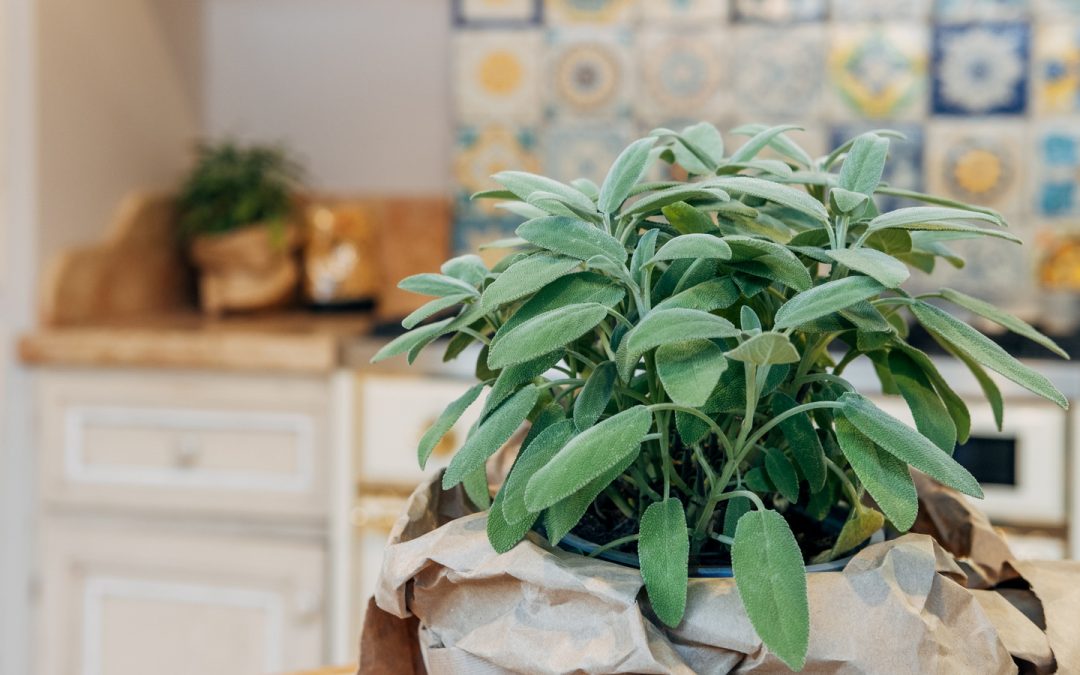
If you want to grow sage indoors, the biggest mistake to avoid is treating it like a thirsty leafy herb. Sage does best with bright light, fast-draining compost, and a watering routine that lets the pot dry a little between drinks. Get that right and it becomes one of the easiest indoor herbs to keep useful, fragrant, and tidy.
Contents
- 0.1 Why sage works well indoors
- 0.2 Best light for growing sage indoors
- 0.3 Best pot and soil to grow sage indoors
- 0.4 How to grow sage indoors from seed or a small plant
- 0.5 How to water sage indoors without killing it
- 0.6 How to keep sage bushy instead of woody
- 0.7 Feeding sage indoors
- 0.8 Common sage problems indoors
- 0.9 Harvesting sage indoors
- 0.10 FAQs About How to Grow Sage Indoors
- 0.11 Final Thoughts on How to Grow Sage Indoors
- 0.12 Related Articles
- 1 Build a Brighter Setup for Better Sage Growth
Quick answer: grow sage indoors
Put sage in the brightest spot you have indoors.
Use a pot with drainage holes and a lighter, airier mix.
Let the top of the compost dry slightly before watering again.
Trim it regularly so it stays bushy instead of woody.
Feed lightly, not heavily, if growth slows in an older pot.
Do this first: Move sage into your brightest window and check the pot drains properly. Those two changes solve most indoor sage problems.
If you’re building a sunny indoor herb cluster rather than growing just one pot, Low Maintenance Indoor Herb Garden Ideas is a useful companion because sage fits well with other drier, brighter herbs.
Why sage works well indoors
Sage is a good indoor herb because it naturally prefers:
strong light
lighter watering
good airflow
regular trimming rather than constant heavy feeding
That makes it a better indoor candidate than softer herbs that collapse quickly in wet compost.
What usually goes wrong indoors is not “sage is difficult” — it’s that the plant gets treated like basil or parsley and ends up sitting too wet in a dim spot.
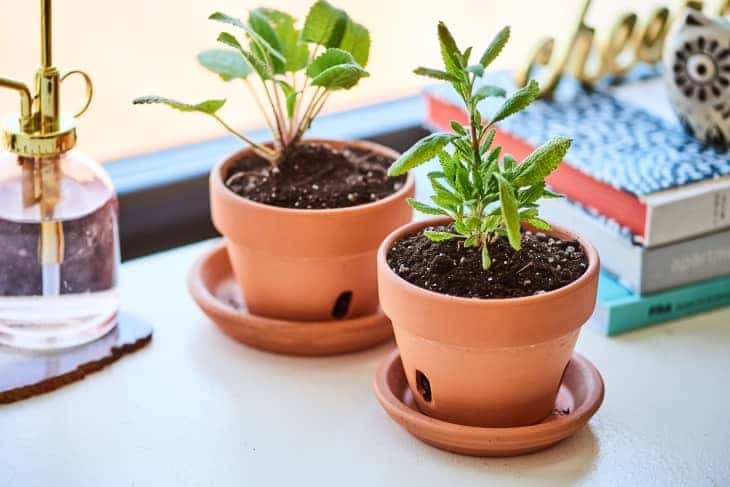
Best light for growing sage indoors
Light is the thing that keeps indoor sage compact, aromatic, and productive.
Sage indoors usually does best when it gets:
the brightest windowsill in the house
several hours of strong daylight
a position close to the glass, not deeper into the room
If the light is too weak, sage often becomes:
leggy and stretched
paler green or dull grey-green
less strongly scented
slower to regrow after harvesting
If your home is dim for part of the year, Best Lights for Indoor Gardening is the best supporting read because stronger light usually helps sage more than extra fertiliser ever will.
A clip-on full-spectrum grow light for herbs can help keep sage compact if your window is bright-ish but not strong enough in winter.
Best pot and soil to grow sage indoors
Sage hates heavy, soggy compost. Indoors, that is one of the quickest ways to lose root health and flavour.
A better indoor setup includes:
a pot with drainage holes
a saucer you can empty easily
a free-draining mix that does not stay muddy
a pot that is not too oversized for the plant
Terracotta often suits sage well because it helps the compost dry more evenly than fully sealed decorative pots.
If your indoor pots tend to stay wet for days, Improve Indoor Plant Drainage is the best related article because that is usually the real reason sage looks weak or yellow indoors.
A terracotta herb pot with drainage holes and saucer is a strong choice for sage because it makes overwatering harder to do by accident.
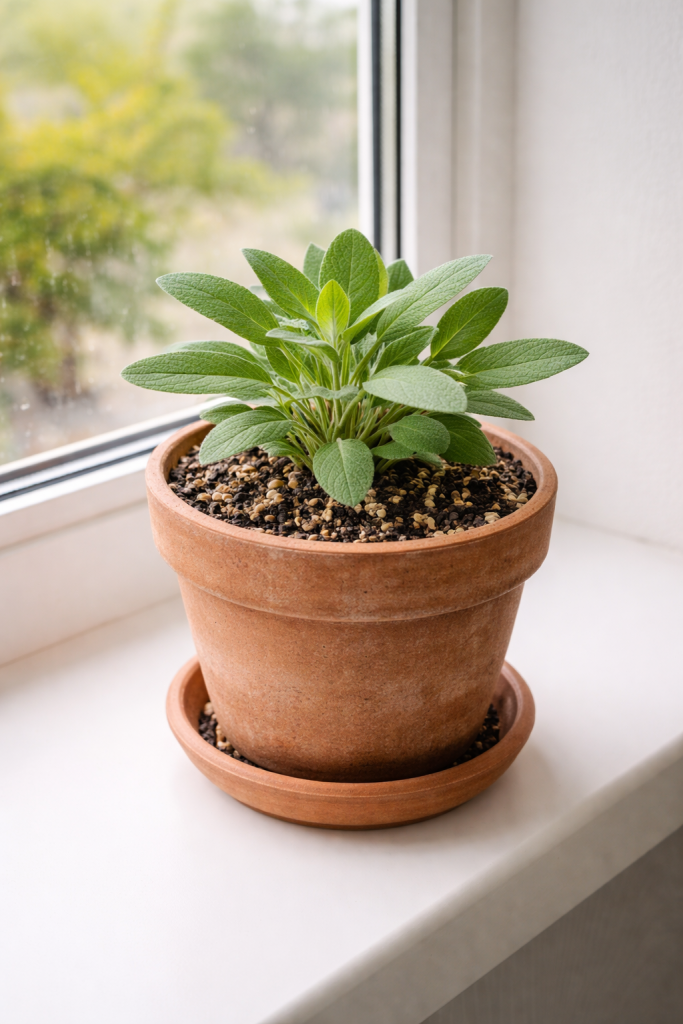
How to grow sage indoors from seed or a small plant
Sage can be grown from seed indoors, but it is often easier and faster to start with a small plant.
If growing from seed
- Fill a small pot or tray with lightly moist compost.
- Sow the seeds thinly and cover them lightly.
- Water gently so the seed stays in place.
- Keep the compost lightly moist until seedlings appear.
- Move them into the brightest place you have as soon as they are up.
If starting with a small plant
repot only if it is cramped
keep the root ball free-draining
avoid drowning it right after bringing it home
If you like indoor herbs that suit a similar bright, drier setup, Grow Thyme Indoors is a useful related read because thyme and sage fit naturally into the same cluster.
How to water sage indoors without killing it
Sage indoors usually struggles more from too much water than too little.
A simple watering rhythm:
water thoroughly
let excess drain away
wait until the top layer dries a bit before watering again
Avoid:
daily little splashes
leaving water sitting in the saucer
compost that always feels heavy or cool
If sage is yellowing, drooping, or looking dull, check the compost before doing anything else. Wet roots explain a lot of indoor sage problems.
If you want a simple check-based routine so you stop second-guessing watering, Indoor Plant Maintenance Routine works well here because sage responds much better to consistent checks than random watering.
How to keep sage bushy instead of woody
Indoor sage can become woody and sparse if it is never trimmed.
To keep it fuller:
pinch or trim tips regularly
cut above leafy growth rather than bare wood
do not wait until stems are very long before shaping it
This encourages side growth and helps the plant stay more useful for kitchen harvesting.
A pair of micro-tip herb pruning snips makes it easier to trim sage neatly in a small indoor pot.
If you want a simple method for where to cut and why, How to Prune Indoor Plants is a helpful support article because the same pruning basics work well for indoor sage.
Feeding sage indoors
Sage does not usually need heavy feeding indoors. Too much fertiliser can push softer, weaker growth and reduce the strong scent people want from the plant.
A sensible approach:
do not feed very young seedlings straight away
feed lightly once the plant is established
use a weak feed only if the plant has been in the same compost a long time
A diluted seaweed-based liquid plant feed is a safer option than anything too strong if indoor sage starts looking pale after months in the same pot.
If feeding feels vague, How Often to Fertilize Indoor Plants helps keep it simple and stops every slow patch turning into a feeding panic.
Common sage problems indoors
Sage is leggy
This is usually weak light. Move it closer to the window or add extra light, then trim lightly to encourage branching.
Leaves are yellowing
The most common cause is wet compost and poor drainage.
Sage feels soft and weak
This usually comes from low light, overwatering, or feeding too heavily.
Growth is slow
Often caused by weak light, older compacted compost, or cool damp roots.
A good general reminder here is that the Missouri Botanical Garden’s sage profile supports the same basics indoor growers see in practice: sage performs best with strong light, good drainage, and a drier rhythm rather than constantly wet soil.
Harvesting sage indoors
Harvesting little and often is the easiest way to keep indoor sage useful without exhausting the plant.
A simple rule:
snip smaller stems regularly
harvest across the plant, not just one side
avoid stripping bare sections all at once
That keeps the plant balanced and encourages more leafy regrowth.
If you like kitchen herbs that work well in a sunny indoor setup, Grow Oregano Indoors is another good related read because it fits the same brighter, lighter-watering herb cluster.
FAQs About How to Grow Sage Indoors
Can sage grow indoors all year?
Yes, as long as it gets strong light and does not sit in wet compost for too long.
Does sage need full sun indoors?
It needs the brightest indoor light you can give it. A sunny window is usually best.
How often should I water sage indoors?
Water when the top layer has dried a little. Indoors, sage usually prefers a lighter watering rhythm than softer herbs.
Is sage easy to grow indoors?
Yes, if you keep it bright and avoid overwatering. Most indoor problems come from wet compost and weak light.
Final Thoughts on How to Grow Sage Indoors
If you want to grow sage indoors successfully, keep the setup bright, free-draining, and simple. Do not overwater it, trim it often, and avoid overfeeding. Once you find the right spot and rhythm, sage becomes one of the most reliable indoor herbs for regular kitchen use.
Related Articles
Keep indoor herbs productive without overcomplicating them
Build a Brighter Setup for Better Sage Growth
Sage grows best indoors when the basics stay simple: strong light, sharp drainage, and regular light trimming. Once those are in place, it becomes one of the easiest indoor herbs to keep fragrant and useful.