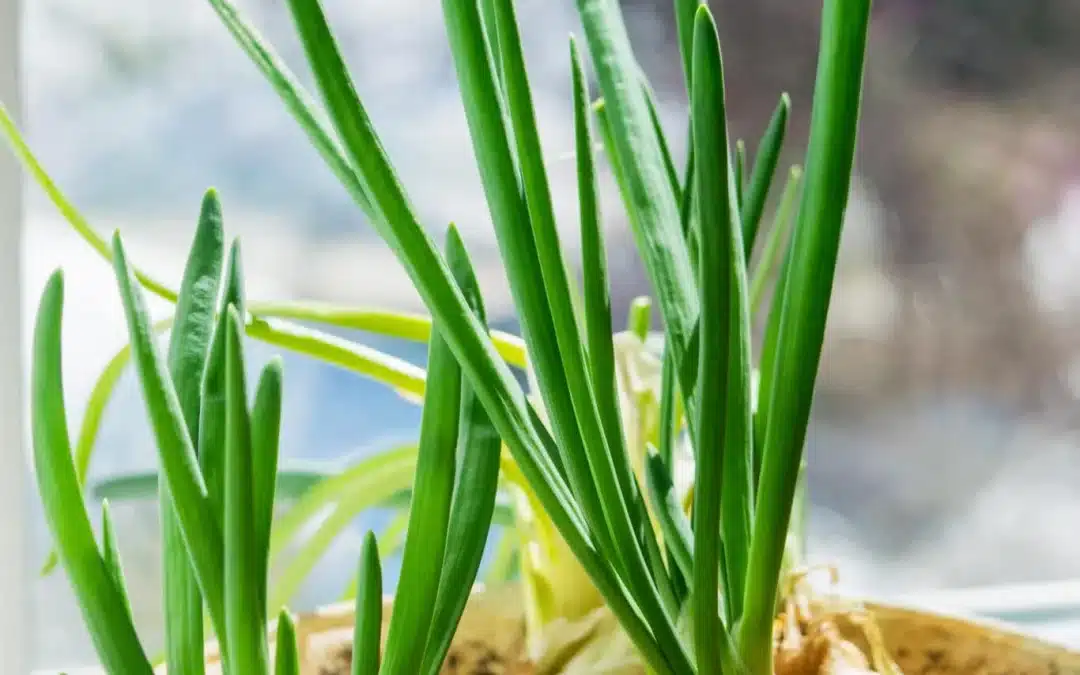
If you want to grow onions indoors, the easiest win is not giant storage onions — it’s green onion tops, spring-onion style growth, and small indoor harvests from a bright spot. Indoors, onions need strong light, sharp drainage, and a setup that doesn’t keep the compost soggy.
Contents
- 0.1 What kind of onions grow best indoors
- 0.2 Best light for growing onions indoors
- 0.3 Best pot and soil to grow onions indoors
- 0.4 How to grow onions indoors from sets or small bulbs
- 0.5 How to grow onions indoors from seed
- 0.6 Regrowing onions indoors from kitchen scraps
- 0.7 How to water onions indoors properly
- 0.8 Can you grow full onion bulbs indoors
- 0.9 Feeding onions indoors
- 0.10 Common onion problems indoors
- 0.11 Harvesting onions indoors
- 0.12 FAQs About How to Grow Onions Indoors
- 0.13 Final Thoughts on How to Grow Onions Indoors
- 0.14 Related Articles
- 1 Build a Brighter Setup for Better Onion Growth
Quick answer: grow onions indoors
Grow onions indoors mainly for green tops or small bulbs, not huge storage onions.
Use the brightest window you have, or add a grow light.
Plant in a deep enough pot with drainage holes.
Keep compost evenly moist, but never heavy and wet.
Regrow kitchen onion bases or sow small batches for steady results.
Do this first: Decide whether you want green onion tops or to try for actual bulbs. Indoor results are usually much better when you grow for greens first.
If you want the quickest edible option using leftovers from the kitchen, Regrow Kitchen Scraps Indoors fits perfectly here because onion regrowth is one of the simplest ways to get started.
What kind of onions grow best indoors
This is the part that makes the whole article easier to follow: not all onions are equally practical indoors.
The easiest indoor options are:
spring onions / green onions
onion sets for greens
small bunching onions
kitchen onion bases for regrowth
The harder option is:
large bulbing onions, especially if your light is average
So if your goal is steady indoor success, treat onions more like a leafy edible crop than a big bulk-storage crop.
Best light for growing onions indoors
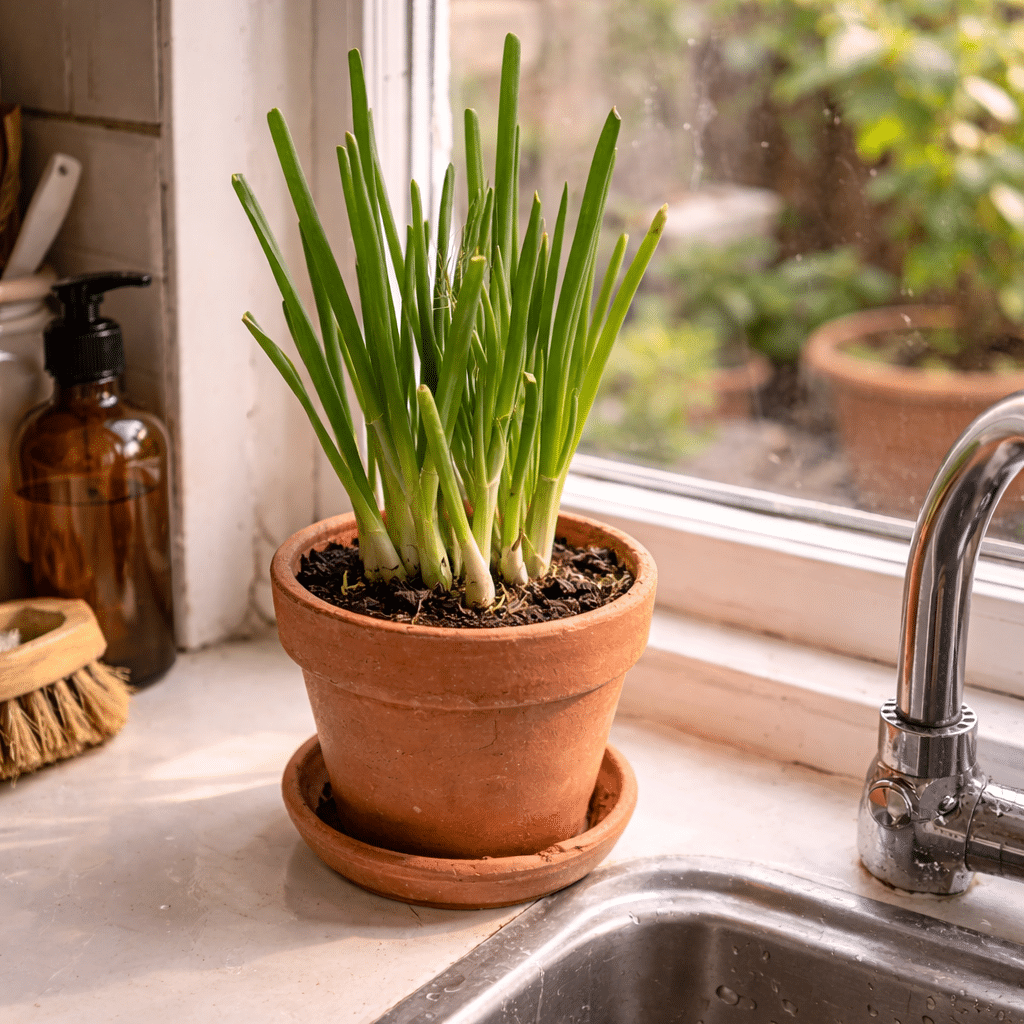
Light is the biggest difference between strong, upright onion growth and pale, floppy stems.
Onions indoors do best when they get:
the brightest window in the house
several hours of strong daylight
a position very close to the window, not deeper into the room
If the light is too weak, onions often become:
thin and floppy
slower to regrow
less productive overall
If your windowsill is not very bright, Best Lights for Indoor Gardening is the best supporting read because onions indoors respond much more to stronger light than to extra feed.
A full-spectrum grow light for indoor vegetables can make a big difference if you want stronger green tops or to give bulb onions a more realistic chance indoors.
Best pot and soil to grow onions indoors
Onions don’t want muddy, compact compost. Indoors, they do much better in a pot that drains properly and gives roots enough room.
A better setup includes:
a pot with drainage holes
a saucer you can empty
compost that is light and free-draining
enough depth for roots to spread without becoming cramped too fast
If you’re growing for green tops, a wider pot is useful. If you’re trying for small bulbs, depth matters more.
If your pots stay wet for days, Improve Indoor Plant Drainage is the best related article because slow-drying compost causes more indoor edible problems than people think.
A deep window box planter with drainage holes works well if you want to grow several onions together indoors rather than one lonely plant in a small pot.
How to grow onions indoors from sets or small bulbs
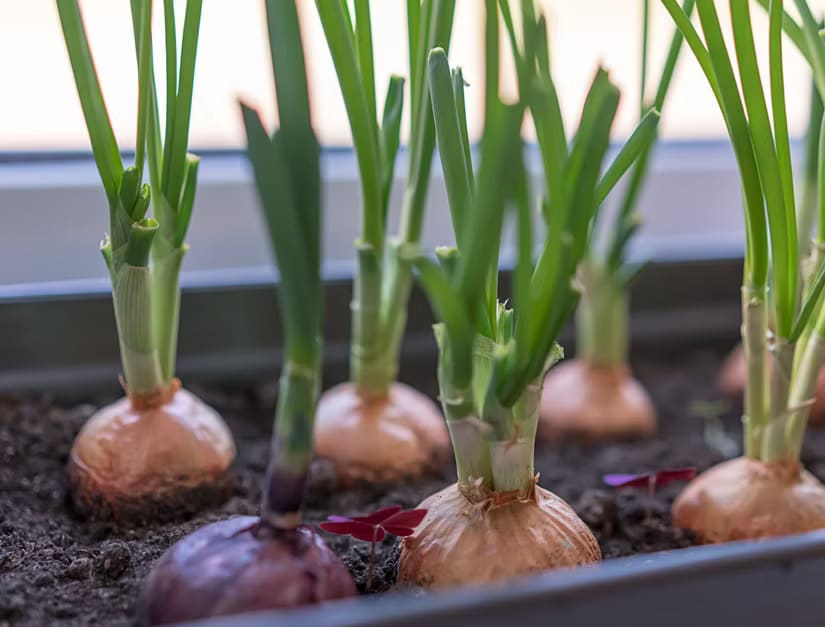
One of the easiest ways to grow onions indoors is from onion sets or small starter bulbs.
A simple method:
- Fill your pot with moist, free-draining compost.
- Plant the onion sets with the tip just above or level with the compost surface.
- Space them so they are not cramped together.
- Water gently and place them straight into your brightest spot.
- Keep the compost lightly moist while they establish.
This method is usually easier than seed if you want faster, more visible results.
How to grow onions indoors from seed
Growing onions from seed indoors can work, but it takes longer and needs more patience.
A simple seed-starting method:
- Fill a tray or pot with lightly moist compost.
- Sow seeds thinly and cover lightly.
- Water gently so you don’t shift the seeds.
- Keep them in bright light once they emerge.
- Thin seedlings so they do not all compete in one crowded patch.
If you enjoy sowing edible crops from seed indoors, Grow Coriander Indoors and Grow Fennel Indoors are good related reads because they use a similar “start small, thin properly, keep light strong” approach.
Regrowing onions indoors from kitchen scraps
This is one of the easiest indoor food-growing wins.
You can regrow onions indoors by:
saving the root end or base
standing it in shallow water briefly
moving it into compost once new growth starts
This works especially well for:
spring onions
bunching onions
smaller onion bases
The main mistake is leaving them in water too long. Water regrowth is a starting stage, not the whole growing method.
How to water onions indoors properly
Onions like steadier moisture than Mediterranean herbs, but they still hate heavy, stagnant wet compost.
A simple indoor watering rhythm:
water thoroughly
let excess drain away
water again once the top starts drying, not while the pot still feels heavy
Too wet:
slower growth
yellowing
soft, weak stems
higher mould risk
Too dry:
slower regrowth
harsher, weaker greens
stalled growth
If you want a simple routine that makes indoor edible care easier to stay on top of, Indoor Plant Maintenance Routine works well here because onions indoors do better with regular checks than random watering.
Can you grow full onion bulbs indoors
You can try, but this is where expectations matter.
Full bulbs indoors are harder because they need:
stronger light
more time
more root room
steadier growing conditions
For most homes, onions indoors are much more reliable when grown for:
green tops
spring-onion style harvests
smaller, fresher indoor use
So yes, bulbs are possible — but leafy top growth is usually the more realistic and rewarding indoor goal.
Feeding onions indoors
Onions do not need heavy feeding indoors, especially if you’re growing mainly for tops.
A simple approach:
let plants establish first
feed lightly during active growth if compost has been in the pot a while
avoid feeding heavily in dim light or wet compost
A diluted seaweed-based liquid plant feed is a safer choice if your onions look pale and have already been growing in the same pot for a while.
If feeding tends to become guesswork, How Often to Fertilize Indoor Plants helps keep it simple.
Common onion problems indoors
Onion greens are thin and floppy
This is usually weak light. Move the pot brighter or add a grow light.
Growth is very slow
Often caused by low light, cramped roots, or compost staying too wet.
Leaves are yellowing
Usually poor drainage, overwatering, or a plant that’s been sitting too long in old compost.
Indoor onions never form proper bulbs
That’s common. Indoors, the setup usually supports leafy growth far better than large bulb production.
A helpful reminder here is that University of Minnesota Extension’s onion guidance shows onions perform best in full sun and well-drained soil, which is why indoor onions usually need very bright light and a freer-draining setup to do well.
Harvesting onions indoors
The easiest indoor harvest is the green growth.
A simple harvesting rule:
snip outer green tops as needed
avoid stripping the whole plant at once
keep harvesting lightly so it can regrow
If you’re growing from sets or regrowing bases, harvesting tops little and often is usually the most productive indoor method.
If you like that “small, repeat harvest” style, Grow Arugula Indoors and Grow Spinach Indoors are useful related reads because they build the same kind of kitchen-friendly indoor edible setup.
FAQs About How to Grow Onions Indoors
Can onions really grow indoors?
Yes, especially for green tops and smaller indoor harvests. Big storage onions are much harder indoors.
What kind of onions grow best indoors?
Spring onions, bunching onions, onion bases for regrowth, and smaller sets are usually the easiest.
Do onions need full sun indoors?
They need the brightest light you can give them. Weak light is one of the biggest reasons they flop or stall.
How often should I water onions indoors?
Water once the top starts drying. Keep the compost lightly moist, but never constantly wet.
Final Thoughts on How to Grow Onions Indoors
If you want to grow onions indoors successfully, focus on green tops and small-scale harvests rather than huge bulbs. Give them the brightest spot possible, use a pot that drains well, and keep the compost lightly moist without letting it turn soggy. That setup is what makes indoor onions feel easy instead of frustrating.
Related Articles
Keep indoor edibles productive without overcomplicating them
Build a Brighter Setup for Better Onion Growth
Indoor onions do best when you focus on the basics: bright light, free-draining compost, and a steady watering rhythm. Once those are in place, green tops and small harvests become much more realistic.