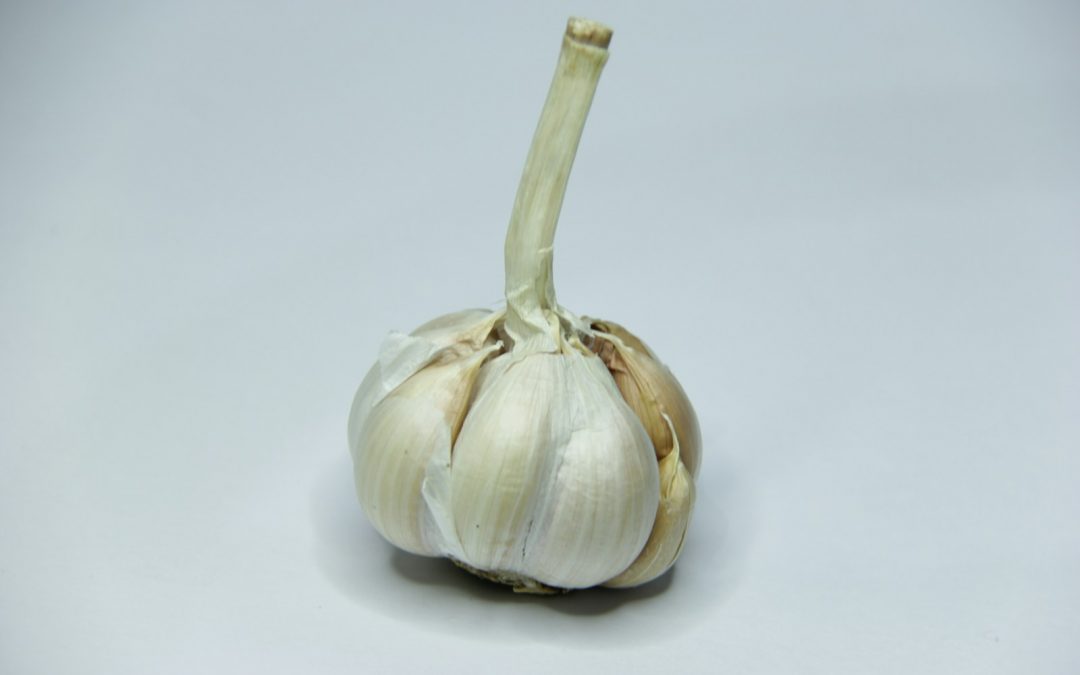
You can grow garlic indoors successfully with bright light, a free-draining pot, and the right goal. For most homes, the easiest win is garlic greens (quick harvest in weeks). Growing full bulbs indoors is possible, but it’s slower and usually needs stronger light.
Quick answer: how to grow garlic indoors
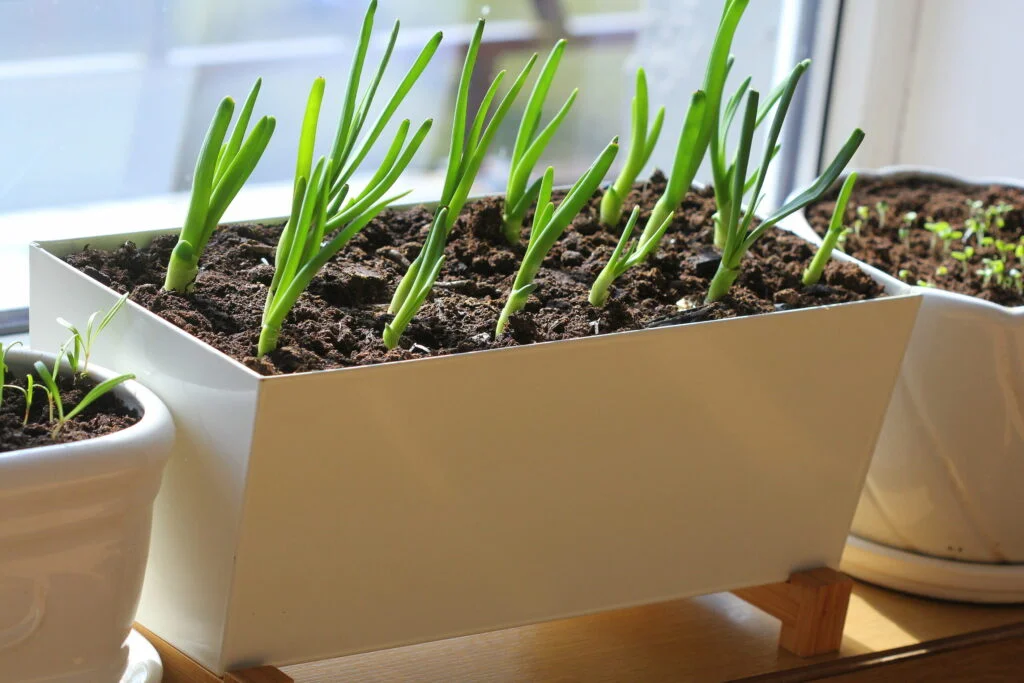
For the easiest result, plant cloves to grow garlic greens (harvest in 2–4 weeks)
Use a pot with drainage holes and a light, airy compost (garlic hates soggy soil)
Plant cloves pointy end up, about 2–3cm deep
Put it in your brightest window (add light in darker months if shoots stretch)
Water lightly — keep compost moist, not wet
Snip greens at 15–20cm tall (you usually get 1–2 cuts)
Do this first: Decide whether you want garlic greens (easy + fast) or you’re aiming for bulbs (slow + needs strong light) — that one choice affects everything else.
Contents
- 0.1 Garlic greens vs bulbs indoors: what actually works
- 0.2 Best garlic to plant indoors
- 0.3 Pot and compost: the part most people get wrong
- 0.4 How to plant garlic indoors (simple steps)
- 0.5 Light: the difference between thick greens and leggy shoots
- 0.6 Watering indoor garlic (the easy routine)
- 0.7 Feeding: do you need fertiliser for indoor garlic?
- 0.8 Harvest garlic greens (and keep them regrowing)
- 0.9 Growing full garlic bulbs indoors (realistic expectations)
- 0.10 Common problems (fast fixes)
- 0.11 FAQs
- 0.12 Final Thoughts on Growing Indoor Garlic
- 0.13 Related Articles
- 1 Get Your Indoor Herb Harvests Growing Faster
Garlic greens vs bulbs indoors: what actually works
Indoors, garlic doesn’t fail because you “didn’t fertilise enough” — it fails because light is limited and compost stays too wet.
Garlic greens: high success rate, fast harvest, ideal for windowsills.
Full bulbs: possible, but you’ll need patience, a deeper pot, and much stronger light for months.
If you only do one version indoors, do garlic greens. They still taste properly garlicky and they’re genuinely useful for cooking.
Best garlic to plant indoors
Choose firm, healthy cloves. Avoid any that are soft, mouldy, or damaged.
Good options
Organic shop garlic (often sprouts well; great for greens)
Seed garlic (best if you want to attempt bulbs, because varieties are clearer)
If your cloves are already sprouting, that’s usually a bonus — it speeds up indoor growth.
Pot and compost: the part most people get wrong
Garlic hates sitting in wet compost. A pot that drains properly matters more than almost anything else.
Use:
a pot with drainage holes
a saucer you can empty
a lighter mix rather than dense compost
If you’ve ever struggled with waterlogged pots, it’s worth sorting your mix first — a good indoor plant soil mix makes watering easier and prevents a lot of problems before they start.
How to plant garlic indoors (simple steps)
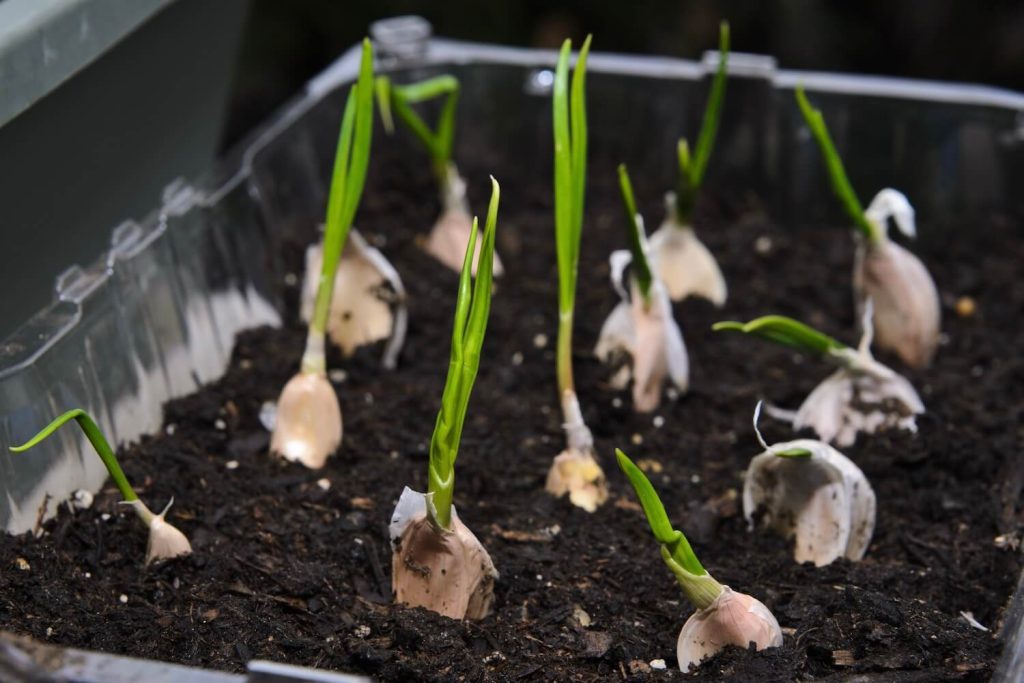
- Split a bulb into individual cloves (keep the papery skins on).
- Fill your pot and level the compost (don’t compact it).
- Plant cloves pointy end up.
- Plant depth: 2–3cm for greens (a bit deeper for bulbs).
- Space cloves a few cm apart (greens can be planted closer than bulbs).
- Water once, then let the top layer dry slightly before the next watering.
Tip: For garlic greens, a wider shallow container lets you plant more cloves for a thicker harvest.
Light: the difference between thick greens and leggy shoots
Garlic indoors needs as much light as you can give it.
Best: your brightest windowsill
If growth is pale, thin, or flopping: it needs more light
If you’re unsure what counts as “good indoor light”, Best Lights for Indoor Gardening makes it simple.
Watering indoor garlic (the easy routine)
Garlic likes consistent moisture, but it hates sitting in water.
Watering routine that works:
Water when the top 2–3cm feels dry
Water thoroughly, then empty the saucer
If the compost stays wet for days, your mix is too heavy (or the pot is too big)
Feeding: do you need fertiliser for indoor garlic?
For garlic greens, you can often skip feeding if you’re harvesting young. If you keep plants longer and growth slows, a gentle feed can help.
Simple rule:
Start feeding only after you see true leaves
Use a weak liquid feed every 2–3 weeks during active growth
If you’re unsure what to feed (or how often), Liquid Fertilizer breaks it down simply.
Harvest garlic greens (and keep them regrowing)
Start snipping when shoots reach 15–20cm
Cut what you need, but leave a few cm so it can regrow
Expect 1–2 decent cuts before the clove runs out of stored energy
Use garlic greens like spring onions — chopped into eggs, pasta, soup, or herb butter.
Growing full garlic bulbs indoors (realistic expectations)
You can get bulbs indoors, but it’s harder than people think.
To have a chance you’ll want:
a deeper pot
strong light for months (often a proper grow light setup)
patience and steady care
Even then, bulbs may be small. If your goal is cooking flavour, greens give you the best return indoors.
Common problems (fast fixes)
Garlic shoots are tall, thin, and floppy
Fix: increase light. Move closer to the window or add a light.
Compost smells sour or stays wet
Fix: let it dry a little more between waterings, empty the saucer, and improve drainage next time. If that smell keeps coming back, Why Indoor Plant Soil Smells Bad explains the most common causes and quick fixes.
Mould on the soil surface
Fix: reduce watering and improve airflow. Scrape off the top layer if needed.
Yellow tips
Fix: usually inconsistent watering or root stress from staying wet too long. Check moisture first.
FAQs
How long does indoor garlic take to grow?
Greens are usually ready in 2–4 weeks. Bulbs take months.
Can I grow garlic indoors from supermarket cloves?
Often yes, especially for greens. Sprouting cloves usually perform well.
Does garlic need full sun indoors?
It needs your brightest spot. Low light = weak growth.
How many times can you regrow garlic greens?
Typically 1–2 good cuts before it slows down.
Final Thoughts on Growing Indoor Garlic
For most homes, the best indoor garlic result is garlic greens: quick, reliable, and useful. Use a pot with drainage, keep compost lightly moist (not soggy), and give it your brightest light. If you try for bulbs, treat it as a longer project and expect slower progress unless your light is strong and consistent.
Related Articles
SMALL UPGRADE, BIGGER RESULTS
Get Your Indoor Herb Harvests Growing Faster
Dial in the 3 things that actually move the needle indoors — light, watering routine, and gentle feeding — so your herbs stop stalling and start producing consistently.