
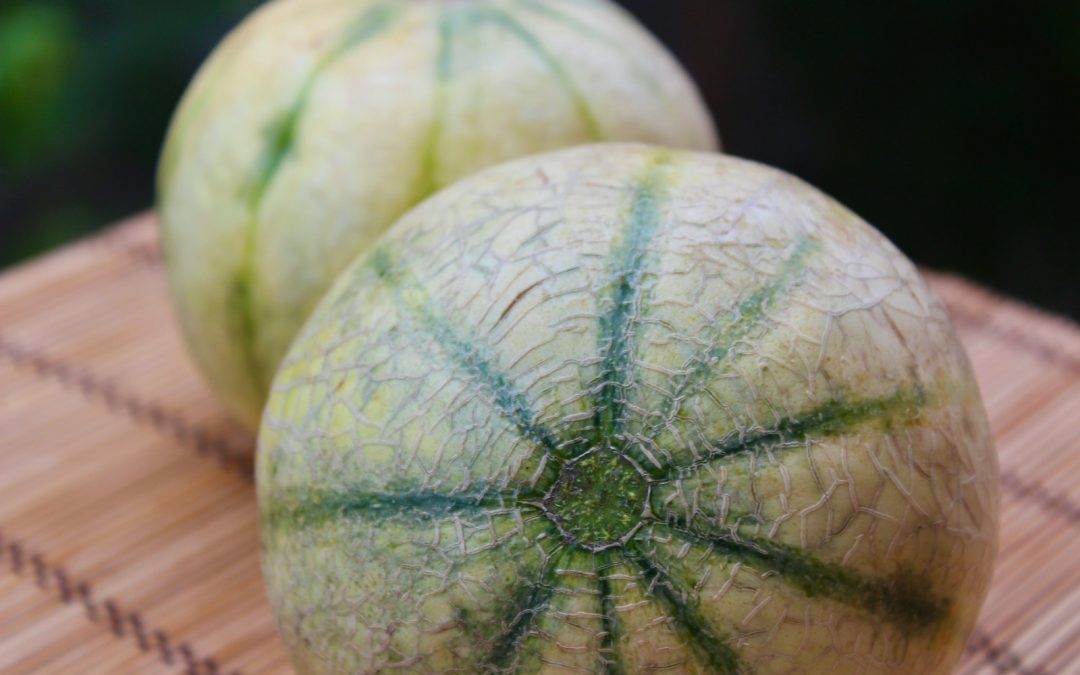
Cantaloupe melons aren’t just for big outdoor plots – with the right setup, you can grow sweet, fragrant fruit inside or on a small balcony. This guide walks you through everything from choosing the right variety to pollinating flowers and picking ripe melons.
If you’re still getting used to container soil basics, the Indoor Vegetable Garden Soil: The Complete Beginner’s Guide is a great companion read before you start planting this more demanding crop.
Contents
- 0.1 Best Cantaloupe Varieties for Indoor or Small-Space Growing
- 0.2 Containers, Soil and Position
- 0.3 Planting Cantaloupe – Seeds vs Seedlings
- 0.4 Training Vines and Supporting Fruit
- 0.5 Watering and Feeding Cantaloupe Melons Indoors
- 0.6 Pollination and Flower Management
- 0.7 Pruning, Airflow and Common Problems
- 0.8 When and How to Harvest Cantaloupe Melons
- 0.9 FAQs About Growing Cantaloupe Melons Indoors
- 0.10 Final Thoughts on Growing Cantaloupe Melons Indoors
- 1 TURN YOUR INDOOR GARDEN INTO A MINI ORCHARD
Best Cantaloupe Varieties for Indoor or Small-Space Growing
Not all melons are suited to containers. Look for compact, early-maturing varieties that set fruit reliably in cooler climates.
Good options include:
‘Minnesota Midget’ – very small, fast-ripening fruits on compact vines.
‘Sugar Cube’ – excellent flavour, disease resistant, and good for containers.
‘Hale’s Best Jumbo (bush type)’ – still vigorous, but some strains are more manageable in pots.
Check seed packets for phrases like “bush type,” “compact vines,” or “suited to containers.”
If you’re starting from scratch, you can buy cantaloupe melon seeds online.
Containers, Soil and Position
Cantaloupe melons love warmth, light and free-draining soil. Indoors, you’re trying to recreate a sunny, sheltered greenhouse.
Container size
Use a pot that’s at least 40–50 cm wide and deep for each plant.
Make sure it has several large drainage holes at the base.
Heavy terracotta or thick plastic pots work well and are less likely to tip over as vines grow.
Soil mix
Use a high-quality vegetable or tomato potting mix with added compost for nutrients.
Mix in perlite or grit (around 20–30%) to keep the soil light and well-draining.
Avoid heavy garden soil – it compacts and can suffocate roots in containers.
Light and temperature
Place plants in the brightest, sunniest spot you have – a south-facing window, warm conservatory or under strong grow lights.
Aim for 20–27°C during the day and not below 15°C at night.
In cooler homes, a small heat mat under seed trays or young plants can help them get established.
Planting Cantaloupe – Seeds vs Seedlings
You can grow cantaloupe melons from seed or buy young plants.
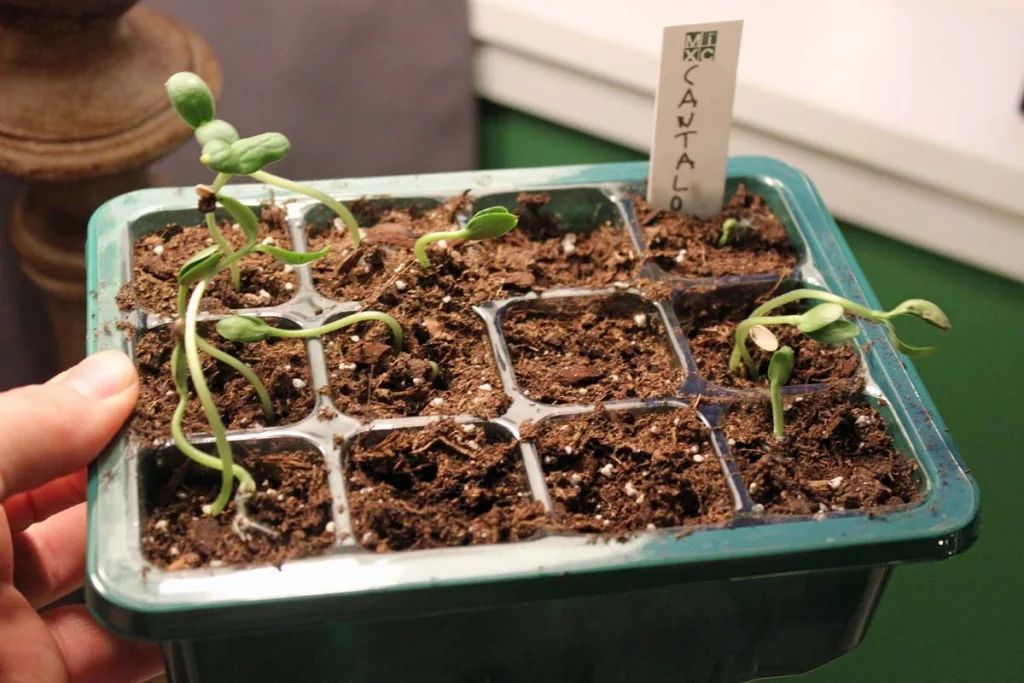
Starting from seed
- Sow indoors 3–4 weeks before your last expected frost date.
- Use small pots or modules filled with seed-starting mix.
- Sow 1–2 seeds per pot, about 1–1.5 cm deep.
- Keep the mix moist and warm (around 21–24°C) until seeds germinate.
- Thin to one strong seedling per pot once they have two true leaves.
Potting on
When roots fill the starter pots and nights are consistently warm, transplant into your large final containers.
Plant at the same depth as in the small pot and water well to settle the soil.
If you’d rather skip the seed stage, look for grafted melon plants or young cantaloupe seedlings at garden centres in late spring.
Training Vines and Supporting Fruit
Cantaloupe vines can sprawl, but indoors you’ll get better growth – and save floor space – by training them vertically.
Providing support
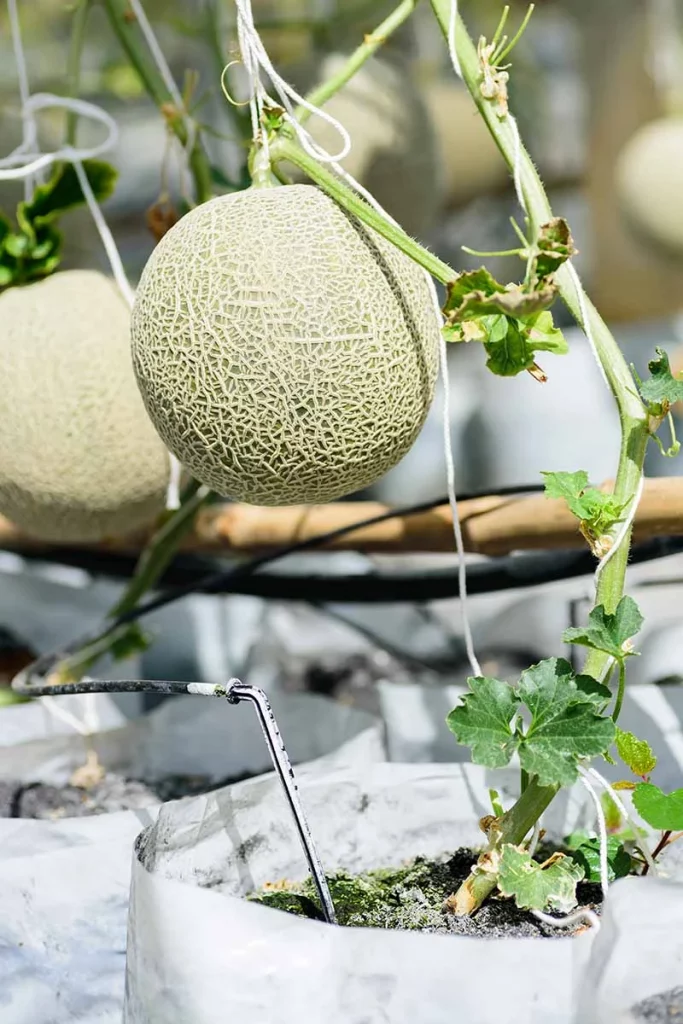
Place a strong trellis, obelisk or netting into the container at planting time.
Gently tie stems to the support as they grow using soft plant ties or strips of fabric.
Space ties every 20–30 cm to hold stems without pinching them.
For neat vertical setups, a sturdy mesh trellis that fits inside large pots works well.
Supporting the fruit
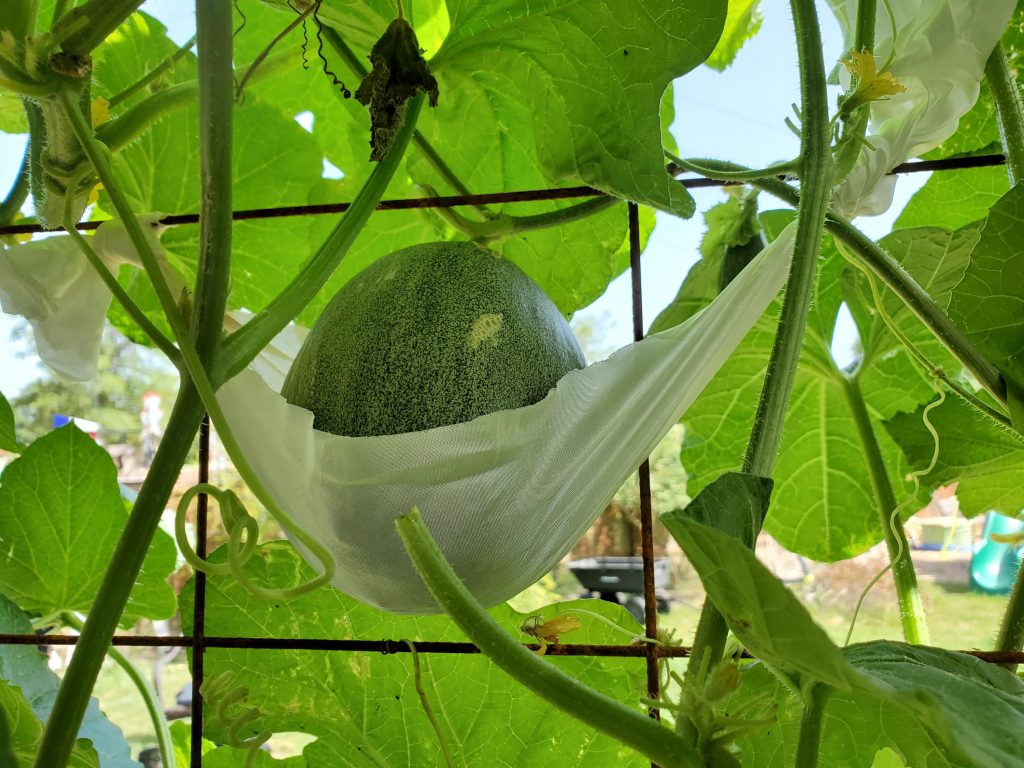
Once fruits reach the size of a small apple, they can become heavy on vertical vines.
Use soft slings – pieces of old tights, net bags or stretchy fabric – to cradle developing melons and tie them to the trellis.
Watering and Feeding Cantaloupe Melons Indoors
Indoor melons are thirsty and hungry – but they hate sitting in soggy soil.
Watering
Keep soil evenly moist while plants are young and flowering.
Water deeply until a little comes out of the drainage holes, then let the top 2–3 cm of soil dry before watering again.
Once fruits start to swell, reduce watering slightly to avoid watery flavour, but never let plants fully dry out.
Feeding
Mix a slow-release organic fertiliser into the potting mix at planting.
From the first flowers onwards, feed every 10–14 days with a high-potash liquid feed (tomato fertiliser is ideal).
Stop feeding about two weeks before harvest so sugars can concentrate in the fruit.
Pollination and Flower Management
Indoors, insects may not do all the pollinating for you – especially behind glass.
Understanding the flowers
Cantaloupe vines produce male flowers first, then female flowers with a tiny baby melon at the base.
Both are needed for fruit to set.
Hand pollination (if needed)
- Choose a freshly opened male flower and remove its petals.
- Gently brush the exposed pollen onto the centre of a female flower.
- Repeat on a few flowers to increase your chances.
If pollination is successful, the miniature melon will steadily grow over the next week. If it shrivels and drops off, try again with new blooms.
Pruning, Airflow and Common Problems
Managing growth keeps your cantaloupe plant productive rather than wild and leafy.
Pruning vines
When the main stem reaches the top of its support, pinch out the tip to encourage side shoots.
Keep 2–4 strong lateral vines and remove very weak or crowded shoots.
On each vine, limit yourself to 2–3 fruits for good size and sweetness in containers.
Airflow and disease
Ensure good air circulation around leaves by not crowding plants together.
Avoid wetting foliage when you water to reduce the risk of powdery mildew.
Remove any yellowing or heavily spotted leaves promptly.
According to reputable gardening advice on melons, good spacing, pruning and strong light are the best defence against mildew and poor fruiting.
When and How to Harvest Cantaloupe Melons
Cantaloupe melons taste best when fully ripe on the plant – they don’t sweeten much after picking.
Signs they’re ready:
The skin changes from green to a warm tan or golden colour between the netted pattern.
A sweet, fruity fragrance is noticeable near the stem.
The stem near the fruit may crack slightly and the melon feels like it would come away with a gentle twist.
To harvest, support the fruit with one hand and cut or twist it off the vine. Handle carefully – ripe melons bruise easily.
FAQs About Growing Cantaloupe Melons Indoors
1. Can you really grow cantaloupe melons indoors?
Yes – as long as they get plenty of light, warmth, and space, cantaloupe melons grow well in large containers indoors or in a conservatory. Grow lights make a big difference in darker homes.
2. How long do cantaloupe melons take to grow from seed to harvest?
Most compact varieties take 70–90 days from transplanting to ripe fruit, depending on temperature and variety. Warmer, brighter conditions usually mean faster growth.
3. Why are my cantaloupe flowers dropping without setting fruit?
Early male flowers often drop naturally. If female flowers with tiny melons are aborting, it’s usually due to poor pollination, low light, or stress from irregular watering.
4. How many melons can I expect from one plant in a container?
In a large pot with good care, aim for 3–6 quality melons per plant. It’s better to have fewer, fully ripe fruits than lots of small, bland ones.
5. Do cantaloupe plants die after fruiting?
Yes. Cantaloupe melons are tender annuals – they complete their life cycle in one season. Save seeds if your variety is open-pollinated, or plan to buy fresh seed each year.
Final Thoughts on Growing Cantaloupe Melons Indoors
Growing cantaloupe melons indoors takes a bit more effort than basic leafy greens, but the reward is worth it – rich fragrance and sun-sweet fruit grown just a few steps from your kitchen. Focus on strong light, warm temperatures, generous containers and consistent care, and your cantaloupe vines will repay you with delicious, home-grown melons.
Start with one or two compact plants, learn how they behave in your space, and then scale up if you enjoy the process. With a little patience and regular attention, indoor cantaloupe growing can become one of the most satisfying projects in your entire indoor garden.
Related Articles
Grow a Full Indoor Fruit Salad
TURN YOUR INDOOR GARDEN INTO A MINI ORCHARD
If you’ve mastered growing cantaloupe melons, why stop at one fruit? Our Growing Peaches Indoors guide shows you how to raise dwarf peach trees in pots, from choosing varieties to pruning and harvesting juicy fruit in small spaces.