
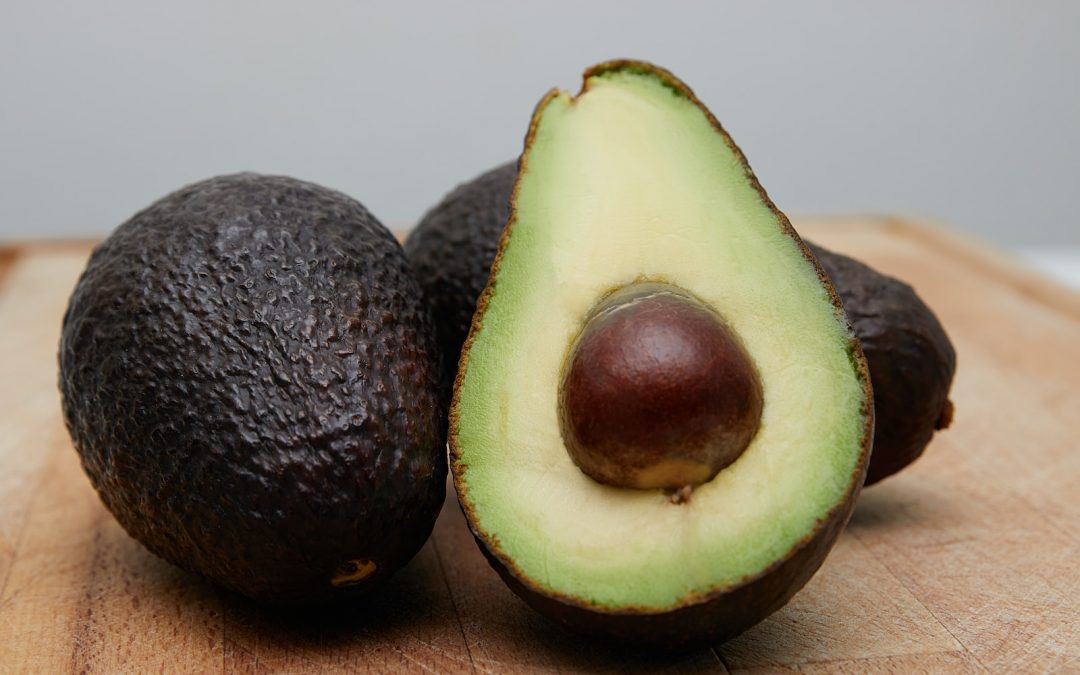
Growing your own avocado tree indoors feels a bit magical. One day it’s just a pit or a young plant in a pot, and a few months later you’ve got glossy leaves and a real mini tree on your windowsill. Even if you never get full-sized fruit, an indoor avocado is a beautiful, statement houseplant.
If you’d like a broader overview of watering, feeding and long-term health, you can pair this guide with our Avocado Tree Care article for extra detail on ongoing maintenance.
Contents
- 0.0.1 1. Choose the right avocado for indoor growing
- 0.0.2 2. Best container and soil mix for indoor avocados
- 0.0.3 3. Light: the make-or-break factor
- 0.0.4 4. Watering an avocado tree indoors
- 0.0.5 5. Feeding and repotting for healthy growth
- 0.0.6 6. Pruning to keep your indoor avocado compact
- 0.0.7 7. Indoor temperature, humidity and general care
- 0.0.8 8. Will an indoor avocado tree actually fruit?
- 0.0.9 9. Common problems with indoor avocado trees
- 0.0.10 Related Articles
- 1 Discover the Best Dwarf Fruit Trees for Indoors
1. Choose the right avocado for indoor growing
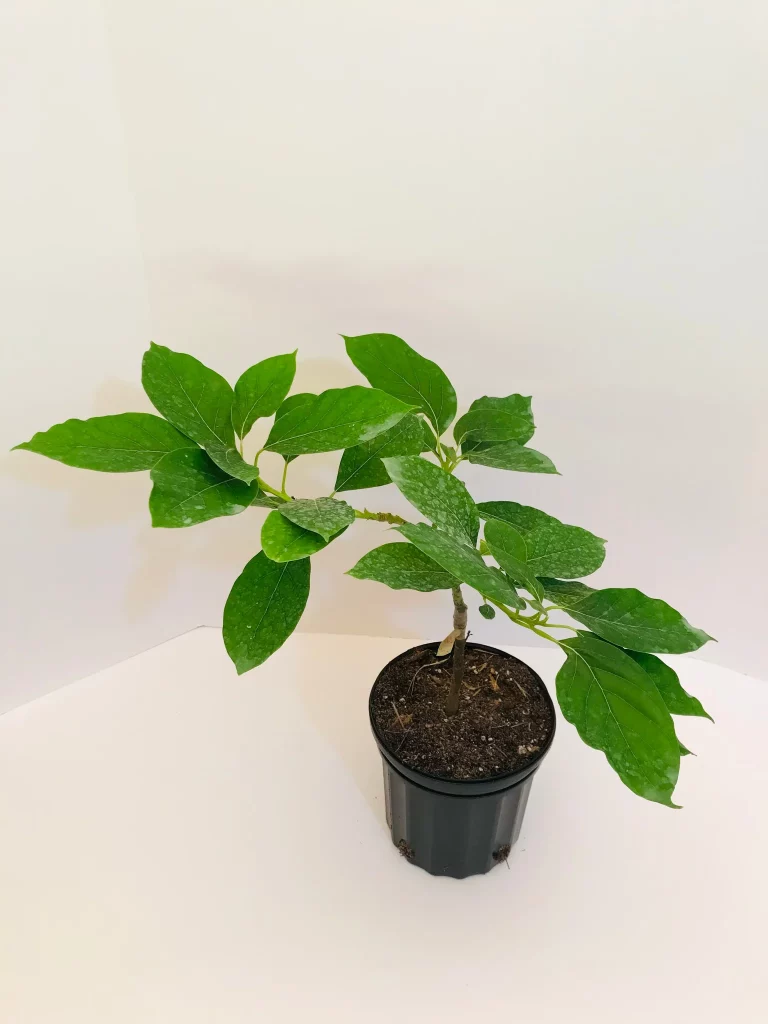
You can grow a tree from a supermarket pit, but for best results indoors it’s worth starting with a named dwarf or semi-dwarf variety.
Dwarf or compact varieties (such as ‘Wurtz’ / ‘Little Cado’) naturally stay smaller, which makes it easier to keep them happy in a pot.
Grafted plants are usually more reliable for fruiting and tend to mature faster than trees grown from seed.
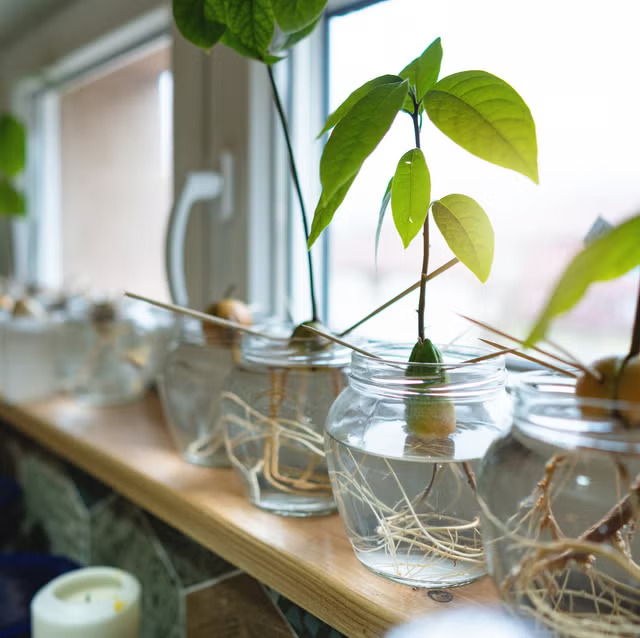
Seed-grown trees are fun projects and lovely foliage plants, but they may never fruit, or the fruit may not match the parent avocado.
If you’re mainly after a decorative indoor tree, any healthy young avocado plant will do. If fruit is your long-term goal, go for a grafted dwarf variety.
2. Best container and soil mix for indoor avocados
Avocados hate having “wet feet”, so drainage is everything.
Pot size & type
Start with a 25–30 cm wide pot (10–12 inches) with large drainage holes.
As the tree grows, move up one size at a time. Over-potting can leave soil wet for too long.
Terracotta or fabric pots help excess moisture escape, but sturdy plastic is fine if drainage is good.
Soil mix
Aim for a light, free-draining mix:
2 parts high-quality peat-free potting soil
1 part perlite or horticultural grit
Optional: a small handful of compost or worm castings for a gentle nutrient boost
Fill the pot so the top of the root ball sits just below the rim. Don’t bury the trunk deeper than it was in its original pot.
For an easy setup, you can use an indoor plant pot with a saucer and drainage holes and boost your mix with perlite for potting soil to keep it light and airy.
3. Light: the make-or-break factor
Indoors, light is the main challenge. Avocados are sun-lovers.
Place your tree in the brightest spot you have – a south- or west-facing window is ideal in the UK.
Aim for 6+ hours of bright light a day. A bit of gentle direct sun is great, but avoid scorching hot mid-summer glass if leaves start to crisp.
If your room is naturally dim, consider a simple LED grow light positioned 20–30 cm above the foliage.
If your avocado grows long, pale stems that lean towards the window, that’s a sign it needs more light.
4. Watering an avocado tree indoors
Most problems with indoor avocados come from over-watering, not under-watering.
Use this simple routine:
- Check the soil with your finger once or twice a week.
- Water only when the top 3–5 cm (1–2 inches) feel dry.
- Water thoroughly until liquid runs from the drainage holes, then empty the saucer.
- In winter, growth slows and the soil dries more slowly – you may water only every 10–14 days.
Signs of over-watering: yellowing leaves, soft stems, and soil that smells sour.
Signs of under-watering: limp, drooping leaves that perk up again after a good drink.
If you struggle to judge when the soil is dry, a simple soil moisture meter for houseplants can take the guesswork out of watering.
5. Feeding and repotting for healthy growth
Avocados are hungry trees, especially in pots.
Feeding
From spring to early autumn, feed every 4–6 weeks with a balanced liquid fertiliser at half strength.
Look for something formulated for citrus or general houseplants rather than a high-phosphorus “bloom booster”.
Stop feeding in late autumn and winter while growth slows.
Repotting
Repot every 1–2 years in early spring, or when roots begin circling the bottom of the pot.
Move up just one pot size each time to keep the root zone manageable.
Trim away any dead or badly circling roots before re-planting in fresh mix.
6. Pruning to keep your indoor avocado compact
Left to itself, an avocado will quickly shoot towards the ceiling. Light pruning keeps it bushier and more attractive.
When the main stem reaches 30–40 cm (12–16 inches), pinch or cut out the soft tip to encourage side branches.
Each time new shoots grow 15–20 cm, you can pinch them again to keep growth dense.
Remove any weak, crossing or damaged branches to improve airflow.
Don’t be afraid to trim – avocados respond well to sensible pruning.
If your tree becomes very leggy, you can cut it back harder in early spring, then let a new framework of branches develop.
7. Indoor temperature, humidity and general care
Indoors, avocados enjoy roughly the same conditions as you do:
Ideal temperature: 18–24°C in the day, not below 10°C for long periods.
Avoid placing the pot right next to radiators, draughty doors or cold windows.
Normal household humidity is fine, but very dry air can crisp leaf tips – a tray of pebbles and water under the pot can help.
Dusty leaves can’t photosynthesise properly. Wipe them gently with a soft, damp cloth every month or so to keep them glossy and green.
8. Will an indoor avocado tree actually fruit?
This is the big question – and the honest answer is: sometimes, but not always.
Grafted dwarf trees have the best chance of fruiting indoors, especially if they’re placed in a bright conservatory or sunny room.
Trees grown from supermarket pits may take 7–10 years or more to mature, and the fruit quality is unpredictable.
Avocados have a quirky flowering pattern (type A and type B), and some varieties fruit better with a partner tree nearby.
If you do get flowers, gentle hand-pollination with a soft paintbrush can help. Even if fruit never appears, most people still love their indoor avocado for its lush, tropical foliage.
9. Common problems with indoor avocado trees
Brown leaf tips
Usually from inconsistent watering or dry air.
Check that the soil isn’t repeatedly drying out completely between waterings, and move away from radiators.
Yellowing leaves
Often caused by over-watering or poor drainage.
Let the soil dry a little more between waterings and make sure excess water can escape.
Leaves dropping suddenly
This can follow a sudden change in light or temperature – for example, moving the plant from a shaded shop into full sun.
Move it gradually into brighter light, and be patient; new leaves usually appear.
Related Articles
Want More Indoor Fruit Tree Ideas?
Discover the Best Dwarf Fruit Trees for Indoors
Once you’ve mastered avocado tree care, it’s fun to expand your indoor orchard. Compact trees like dwarf peaches, lemons, and oranges can all thrive in containers with the right light, soil, and pruning. Head over to Dwarf Fruit Trees for Indoors – A Complete Guide to compare varieties, learn pot sizes, and see which fruit trees will suit your home best.