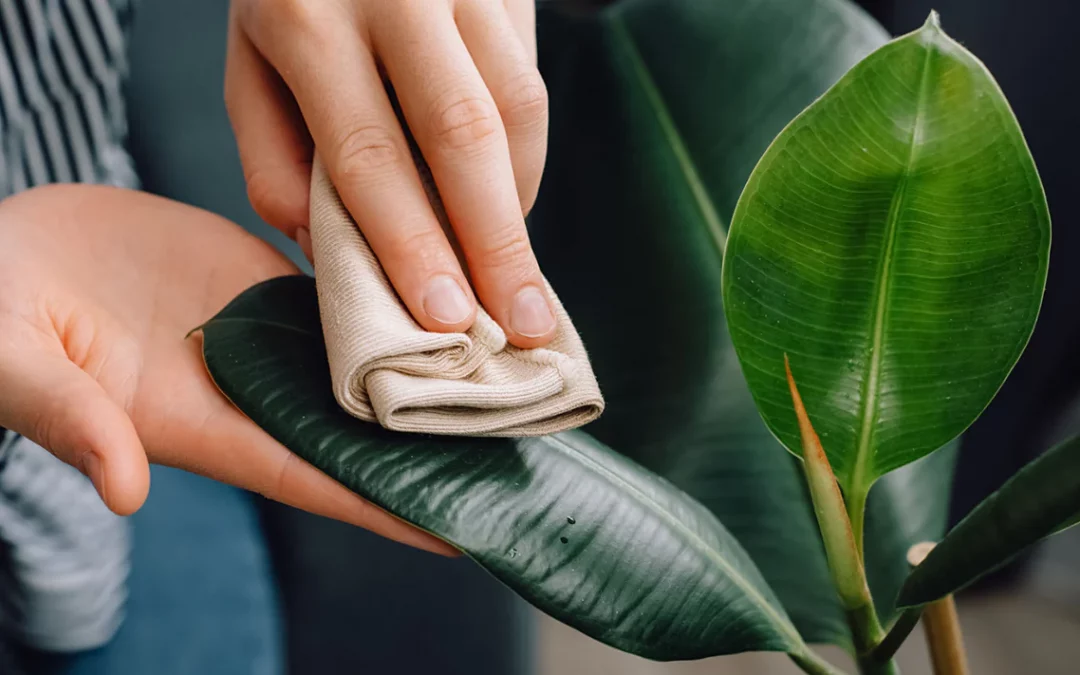
To clean dust off indoor plant leaves, you don’t need fancy sprays — you just need the right method for your plant type (waxy, delicate, hairy, or lots of tiny leaves). A quick clean helps leaves absorb more light and keeps pests easier to spot.
Contents
- 0.1 Why dusty leaves matter more than you think
- 0.2 The safest method for most plants: damp cloth + support the leaf
- 0.3 Shower rinse method: best for ferns, palms, and “too many leaves to wipe”
- 0.4 Fuzzy or hairy leaves: brush, don’t wipe
- 0.5 Common mistakes that make leaves worse (and what to do instead)
- 0.6 Quick plant signals to help you clean the right way
- 0.7 How often should you clean dust off indoor plant leaves?
- 0.8 FAQs About Cleaning Dust Off Indoor Plant Leaves
- 0.9 Final Thoughts on Cleaning Dust Off Indoor Plant Leaves
- 0.10 Related Articles
- 1 Build a Simple “Plant Clean” Routine
Quick answer: clean dust off indoor plant leaves
Wipe large, sturdy leaves with a slightly damp microfibre cloth
Rinse plants with lots of small leaves in the shower with lukewarm water
Brush fuzzy/hairy leaves gently (avoid rubbing with water)
Skip “leaf shine” oils — they can leave residue and attract more dust
Clean little and often (it’s quicker than a once-a-year deep clean)
Do this first: Pick one plant today and clean just 5–10 leaves — it’s the fastest way to build the habit without it turning into a big job.
If you want this to become a simple weekly habit (so dust doesn’t build up), our Indoor Plant Maintenance Routine fits perfectly alongside leaf cleaning.
Why dusty leaves matter more than you think
Dust isn’t just cosmetic. A dusty layer can reduce how much light reaches the leaf surface, and it also makes it harder for the plant to “breathe” properly through tiny pores.
A quick clean helps you:
spot pests early (eggs, speckling, sticky patches)
catch leaf issues sooner (yellowing, scorch, fungus marks)
keep growth more even (especially in lower light rooms)
The safest method for most plants: damp cloth + support the leaf
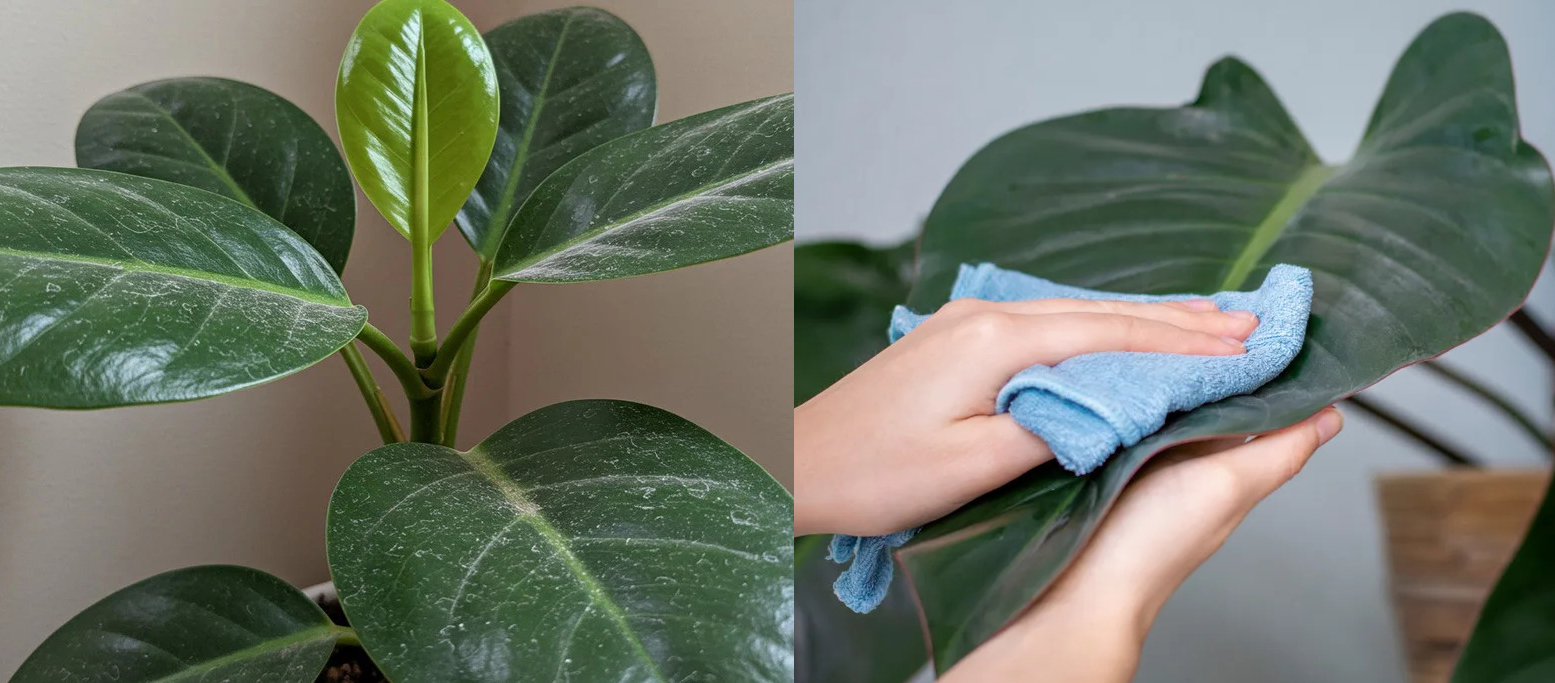
For most common houseplants with broad leaves (monstera, rubber plant, peace lily, pothos), a cloth wipe is the safest and fastest.
Do this:
- Use a soft microfibre cloth and dampen it with lukewarm water
- Support the leaf from underneath with your hand
- Wipe from the stem outward in one direction
- Flip and gently wipe the underside if it’s sturdy (many pests hide there)
Avoid: scrubbing, cold water, and strong soaps on leaves.
A pair of microfibre plant dusting gloves makes it easier to wipe both sides in one motion (especially on larger leafy plants).
Shower rinse method: best for ferns, palms, and “too many leaves to wipe”
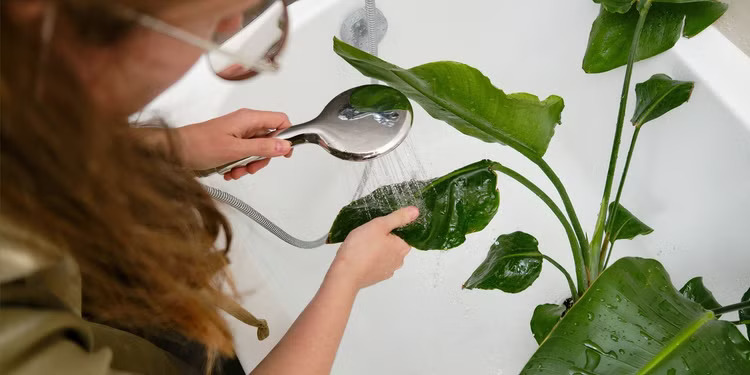
If your plant has lots of small leaflets (ferns, palms, ivy), wiping each leaf is a nightmare. A shower rinse is easier and often safer.
Do this:
Put the plant in the shower or sink
Use lukewarm water on a gentle setting
Let water run over the leaves for 30–60 seconds
Tip to drain, then let it dry somewhere bright (not in a cold draught)
Tip: Cover the soil surface with your hand or a bit of kitchen roll if you don’t want compost splashing out.
Lower leaves that stay damp can become a pest magnet, so if you’re seeing gnats or little flies around the pot, our Fungus Gnats post is a good next check.
Fuzzy or hairy leaves: brush, don’t wipe
Some plants (like African violets and many velvety-leaf plants) don’t like being rubbed with water — it can mark or damage the leaf surface.
Do this instead:
Use a soft, clean brush (make-up brush or small paintbrush works)
Brush gently from the centre outward
Don’t press hard — you’re lifting dust, not polishing
A soft plant leaf cleaning brush is handy if you’ve got a few delicate-leaf plants and want one tool that’s always clean and ready.
Common mistakes that make leaves worse (and what to do instead)
Using oils, milk, or “leaf shine” hacks
They can leave residue that attracts dust and sometimes blocks leaf pores. If you want shine, clean regularly — shine comes from healthy leaf surfaces, not coatings.
Using strong soap mixes
Strong mixes can strip protective waxy layers and cause spotting. If a plant needs more than water (eg sticky residue), keep any soap extremely mild and rinse thoroughly.
Cleaning in harsh sun
Wet leaves under strong light can mark more easily. Clean in the morning or when the plant isn’t in direct, hot sun.
If you’re trying to work out whether marks are dust, pests, or actual damage, our Indoor Plant Pest Guide: Identify and Treat Pests Fast can help you rule things out quickly.
If you’re tempted to use hot/cold water or stronger soap “to speed it up”, UNH Extension suggests rinsing dirty houseplants with lukewarm water, and only using a very mild diluted soap solution if needed — then rinsing again.
Quick plant signals to help you clean the right way
Under each plant, use these quick signals as your “cheat sheet”:
Leaves feel leathery/waxy: cloth wipe is usually safe
Leaves feel velvety/fuzzy: brush only
Lots of tiny leaves: shower rinse is easiest
Sticky patches: check for pests (often honeydew) before cleaning
White dusty film: could be mineral residue — wipe gently and review water quality
If you’re noticing dusty leaves and slow growth, it can also be a light issue — Best Lights for Indoor Gardening is the clearest overview on your site for getting that side right.
How often should you clean dust off indoor plant leaves?
This depends on your home (pets, open windows, nearby roads, heating).
A simple rhythm:
High-dust rooms: quick wipe every 1–2 weeks
Normal homes: every 3–4 weeks
Low-dust areas: every 6–8 weeks
The real trick is not “perfect frequency” — it’s making it easy enough that you actually do it.
FAQs About Cleaning Dust Off Indoor Plant Leaves
Can I use washing-up liquid to clean leaves?
Only if absolutely needed, and only very diluted — then rinse with lukewarm water. Strong soap can damage leaves.
Should I clean the underside of leaves too?
If the leaf is sturdy, yes — that’s where pests often hide. For delicate leaves, brush gently instead.
Do leaf shine products help plants?
They can make leaves look shiny short-term, but they often leave residue. Regular gentle cleaning is usually better.
My plant gets dusty fast — what can I do?
A smaller, more frequent wipe helps. Also check airflow and nearby dust sources (radiators, open windows, traffic-facing rooms).
Final Thoughts on Cleaning Dust Off Indoor Plant Leaves
If you want plants to look better and grow more consistently, cleaning leaves is one of the quickest wins. Use a damp microfibre wipe for broad leaves, a shower rinse for “too many leaf” plants, and a soft brush for fuzzy foliage. Keep it gentle, keep it regular, and you’ll notice the difference.
Related Articles
Make leaf cleaning quick, not a chore
Build a Simple “Plant Clean” Routine
Dusty leaves are easy to ignore until a plant looks dull or stressed. A simple routine — quick wipes, occasional shower rinses, and gentle brushing for delicate plants — keeps leaves healthier and makes pest checks much easier.