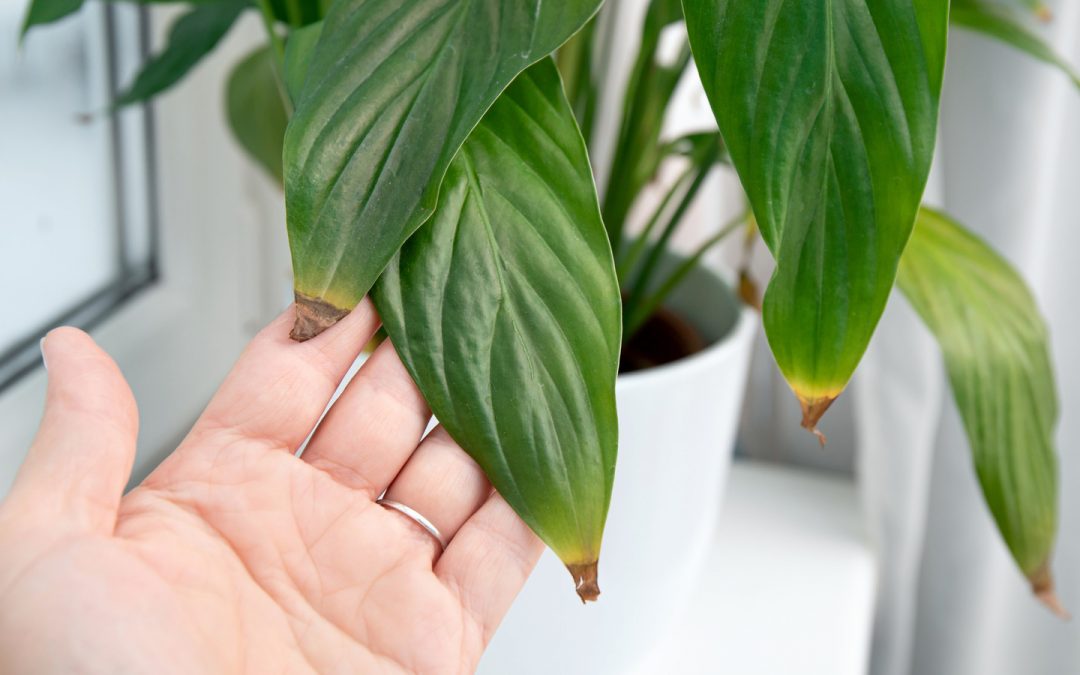
Brown leaf tips on indoor plants usually come from dry air, inconsistent watering, salt build-up, or too much direct sun. The good news: you can normally stop it quickly once you match the fix to the cause.
Contents
- 0.1 What brown leaf tips actually mean
- 0.2 1) Dry air and low humidity
- 0.3 2) Underwatering or “dry swings”
- 0.4 3) Overwatering (yes, it can still cause brown tips)
- 0.5 4) Salt build-up from fertiliser or tap water
- 0.6 5) Too much direct sun or heat
- 0.7 6) Mechanical damage and “dirty leaves”
- 0.8 7) Disease or disorders (less common, but possible)
- 0.9 Trim brown tips the right way (so it still looks natural)
- 0.10 Quick troubleshooting: match the symptom to the cause
- 0.11 Final Thoughts on Brown Leaf Tips on Indoor Plants
- 0.12 Related Articles
- 1 Indoor Garden Care – Definitive Guide
Quick answer: why your leaf tips are turning brown
Dry air is the #1 cause (tips crisp + edges curl)
Underwatering causes dry, crunchy tips (soil pulls from pot sides)
Overwatering can still cause browning (roots struggle → tips brown)
Tap-water minerals/salts build up and burn tips over time
Too much sun/heat scorches exposed tips (especially near windows/radiators)
Old leaves naturally brown at the ends first (especially lower leaves)
Do this first: Trim the worst brown tips (purely cosmetic) and then check the soil moisture 2–3cm down before you change anything else.
What brown leaf tips actually mean
Brown tips are your plant’s “stress signal”. The leaf end dries out first because it’s the furthest point from the roots and the last place to get water when conditions aren’t ideal.
1) Dry air and low humidity
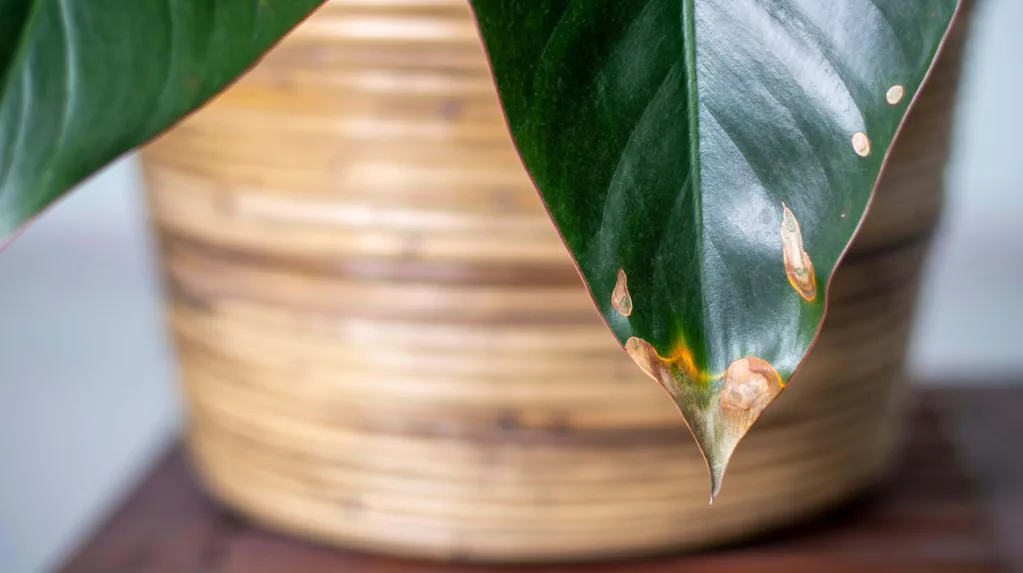
If your plant’s tips are crispy and the edges feel papery, dry indoor air is often the culprit (common in winter heating, near radiators, or in very sunny rooms).
Fix
Move it away from radiators and hot air blasts
Group plants together (micro-humidity zone)
Use a pebble tray (keep the pot above the waterline)
Consider a humidifier if you’re fighting this all season
A simple way to stop guessing is to measure it: a digital hygrometer makes it obvious when your room is running too dry.
2) Underwatering or “dry swings”
If the soil goes bone dry, then gets soaked, leaf tips often brown because the plant is repeatedly “shocked”.
Fix
Water thoroughly until it drains out the bottom
Empty the saucer after 10–15 minutes
Water again when the top few cm feel just drier, not fully dried out
If you like a simple weekly rhythm (so pots don’t swing between dry and soaked), Indoor Plant Maintenance Routine fits nicely here.
3) Overwatering (yes, it can still cause brown tips)
If the soil stays wet for long periods, roots can’t breathe properly. The plant may look “thirsty” even though the pot is damp — and tips start browning.
Fast checks
Soil smells musty
Pot feels heavy for days after watering
Leaves yellow as well as browning tips
Fix
Let the soil dry a bit more between waterings
Improve drainage (more perlite, chunkier mix)
Make sure the pot has drainage holes
For a proper diagnosis checklist (and quick fixes), Why Indoor Plant Soil Smells Bad is a useful next read.
4) Salt build-up from fertiliser or tap water
White crust on soil, a “hard” feel to the compost, or browning that slowly creeps across the edge can point to mineral salts building up.
Fix (10 minutes)
Flush the pot: run plenty of water through the soil for 1–2 minutes
Pause feeding for 2–4 weeks
Reduce fertiliser strength (half strength is often plenty indoors)
If you want feeding to stay simple (and avoid overdoing it), Liquid Fertilizer clears up the “how often and how much” side.
5) Too much direct sun or heat
Tips can scorch when leaves sit in harsh sun, especially through glass (or right beside a heater).
Fix
Pull the plant back from the window by 30–60cm
Use a sheer curtain at peak sun
Rotate weekly so one side doesn’t cook
If your plant looks tall, pale, or stretched as well, it’s usually a light-quality issue rather than “too much sun”. Best Lights for Indoor Gardening helps you get that balance right.
6) Mechanical damage and “dirty leaves”
Sometimes it’s not care at all — it’s rubbing, brushing past, or dusty leaves reducing how well the plant uses light.
Fix
Wipe leaves gently (especially larger-leaf plants)
Keep plants away from high-traffic spots
A quick clean makes a surprising difference on broad-leaf plants — How to Clean Houseplant Leaves is handy if you want a simple method that won’t mark the foliage.
7) Disease or disorders (less common, but possible)
If browning starts with yellowing at the tips, spreads in a pattern, or you see spotting/mottling, it can be a disorder or disease rather than basic care.
Leaf tips that start yellow can sometimes turn tan or brown as the issue progresses — Clemson’s houseplant diseases and disorders guide explains this pattern.
What to do
Isolate the plant for 1–2 weeks
Remove worst leaves
Improve airflow and avoid wetting foliage
If you suspect pests too, Indoor Plant Pest Guide: Identify and Treat Pests Fast is the quickest way to match symptoms.
Trim brown tips the right way (so it still looks natural)
Trimming won’t “heal” the leaf, but it makes the plant look better and stops you obsessing over damage that can’t reverse.
How
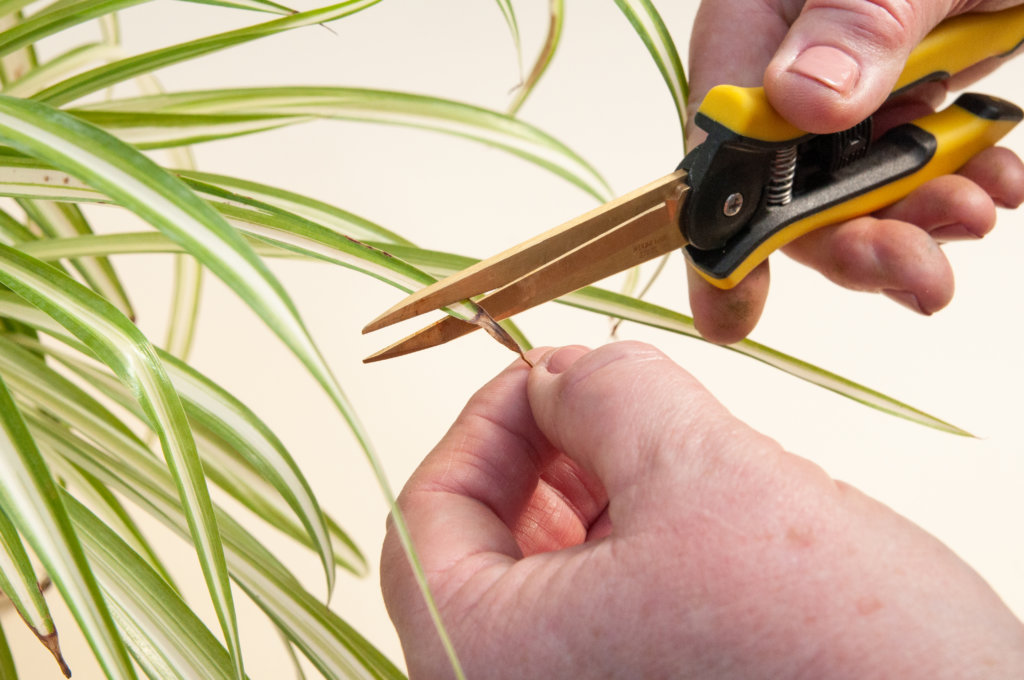
Use clean, sharp snips
Follow the leaf’s natural shape
Leave a tiny brown margin (1–2mm) so you don’t cut into healthy tissue
Clean cuts make it look neater (and reduce tearing).
Quick troubleshooting: match the symptom to the cause
Crispy tips + curling edges: dry air / underwatering
Soft leaf + wet soil + brown tips: overwatering / poor drainage
White crust on soil + slow browning: salt build-up
Only on window side: sun/heat scorch
Spots + patterning: possible disease/disorder
Final Thoughts on Brown Leaf Tips on Indoor Plants
Brown tips are usually fixable once you stop treating every plant the same. Start with the basics: soil moisture, airflow, and humidity, then tighten your routine so the plant stays steady rather than swinging between extremes. Trim the damaged tips for looks, but focus your effort on the cause — that’s what prevents it coming back.
Related Articles
GIVE YOUR WHOLE INDOOR GARDEN A GLOW-UP
Indoor Garden Care – Definitive Guide
Learn how to water, feed, position, and maintain all your houseplants so your new plant stands don’t just look good – they help your plants thrive long term.