
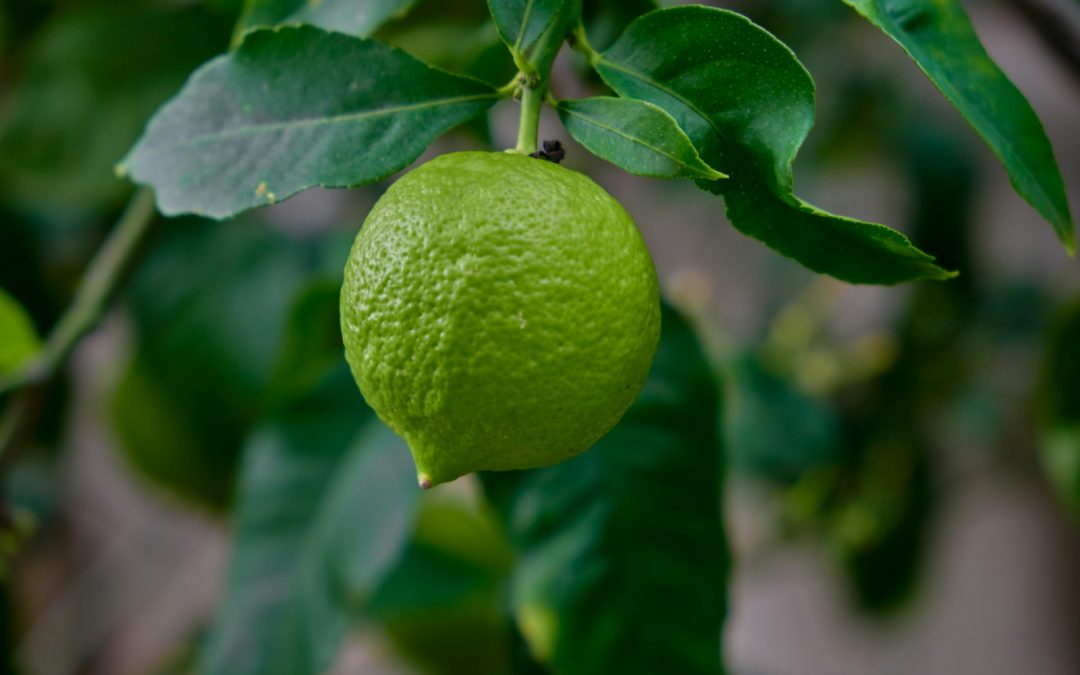
Lime trees look tropical and glamorous, but they’re not just for big gardens and sunny patios. With the right variety and a bit of know-how, you can grow a productive lime tree in a pot in your home or conservatory – and pick your own limes for drinks, cooking, and desserts.
In this guide, we’ll walk through the best way to grow lime trees indoors: which variety to choose, the ideal pot and soil, how to water and feed, and what to do if leaves start yellowing or flowers drop.
If you already grow other citrus, you might also like Dwarf Lemon Trees: How to Grow and Care Indoors – it pairs nicely with this lime-focused article.
Contents
- 0.1 Quick Facts About Indoor Lime Trees
- 0.2 Choosing the Right Lime Tree
- 0.3 Best Containers and Soil for Lime Trees
- 0.4 Light, Temperature and Humidity
- 0.5 Watering and Feeding Schedule
- 0.6 Pruning and Training for Bushy Growth
- 0.7 Pollination and Fruit Set Indoors
- 0.8 Common Problems With Lime Trees (and How to Fix Them)
- 0.9 FAQs About Growing Lime Trees Indoors
- 0.10 Final Thoughts on Growing Lime Trees Indoors
- 0.11 Related Articles
- 1 Explore Dwarf Fruit Trees for Indoors
Quick Facts About Indoor Lime Trees
Best for: Bright conservatories, south- or west-facing windows, heated greenhouses
Light: 6–8 hours of bright light or strong grow lights
Temperature: 15–27°C; protect from frost and cold draughts
Height in pots: 1–1.5 m for dwarf types
Time to fruit: 2–4 years from young grafted tree, faster than seed-grown
Choosing the Right Lime Tree
For indoor growing, dwarf and container-friendly varieties are easiest:
Dwarf Key lime (Mexican lime): Compact, highly fragrant flowers, lots of small limes.
Tahiti or Persian lime: Slightly larger tree, seedless fruits, very popular for drinks.
Kaffir lime (Makrut): Grown mainly for its aromatic leaves used in cooking.
Look for:
A grafted plant (not grown from seed) – it fruits earlier and more reliably.
Healthy green leaves, no sticky residue, webs or visible pests.
A sturdy main stem with several side branches.
Best Containers and Soil for Lime Trees
Pot size and material
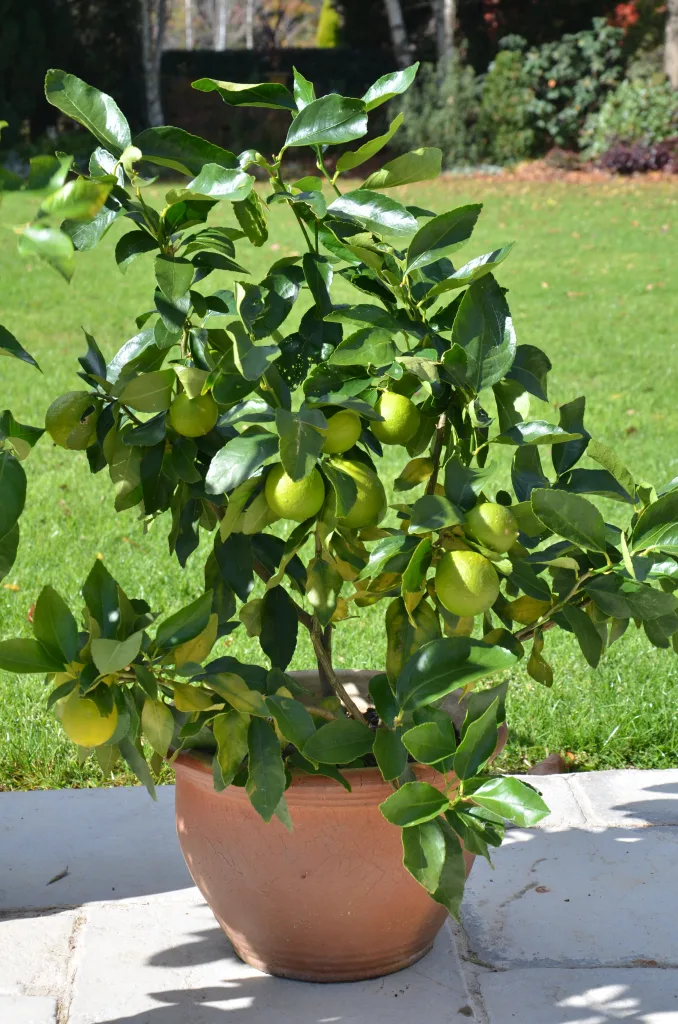
Start with a 30–40 cm wide pot with drainage holes; upgrade to a larger one every 2–3 years.
Terracotta lets excess moisture escape; plastic is lighter and holds water a bit longer.
Always use a saucer to protect floors – but don’t leave water sitting in it.
A good option is a deep indoor plant pot with saucer and drainage holes – easy to move and designed for larger houseplants.
Soil mix
Lime trees hate wet, heavy soil. Aim for a light, free-draining mix:
2 parts peat-free multipurpose or citrus potting mix
1 part perlite or horticultural grit
Optional: a small handful of compost or worm castings for extra nutrients
Look for a citrus-specific potting mix if you can – these are blended for drainage and the right pH.
Light, Temperature and Humidity
Light
Lime trees are sun-lovers:
Aim for 6–8 hours of bright light each day.
South- or west-facing windows are ideal; east is fine if light is strong.
In darker homes or UK winters, add a full-spectrum LED grow light placed 20–30 cm above the canopy.
Temperature
Ideal range is 15–27°C.
Avoid placing the tree right next to radiators, air-con units or an often-opened outside door.
If you move the tree outdoors in summer, harden it off gradually and bring it back in before night temps drop below 10°C.
Humidity
Central heating can be very drying:
Mist around (not directly onto flowers) a few times a week, or
Stand the pot on a pebble tray with water just below the top of the stones.
Watering and Feeding Schedule
Lime trees dislike extremes – don’t let them stay waterlogged or bone dry for long.
How to water
Check the top 3–5 cm of soil; if it feels dry, water thoroughly.
Water until a little drains into the saucer, then empty the saucer after 10–15 minutes.
In summer, you might water 2–3 times a week; in winter, often only once every 7–10 days.
A simple soil moisture meter can take the guesswork out of watering.
Feeding
Lime trees are hungry feeders:
Use a citrus fertiliser with added magnesium and trace elements from spring to early autumn.
Feed every 2–3 weeks at the recommended rate, on already moist soil.
In winter, reduce feeding to once a month or pause if the tree is resting and light levels are low.
Pruning and Training for Bushy Growth
Regular pruning keeps your lime tree compact, tidy and productive.
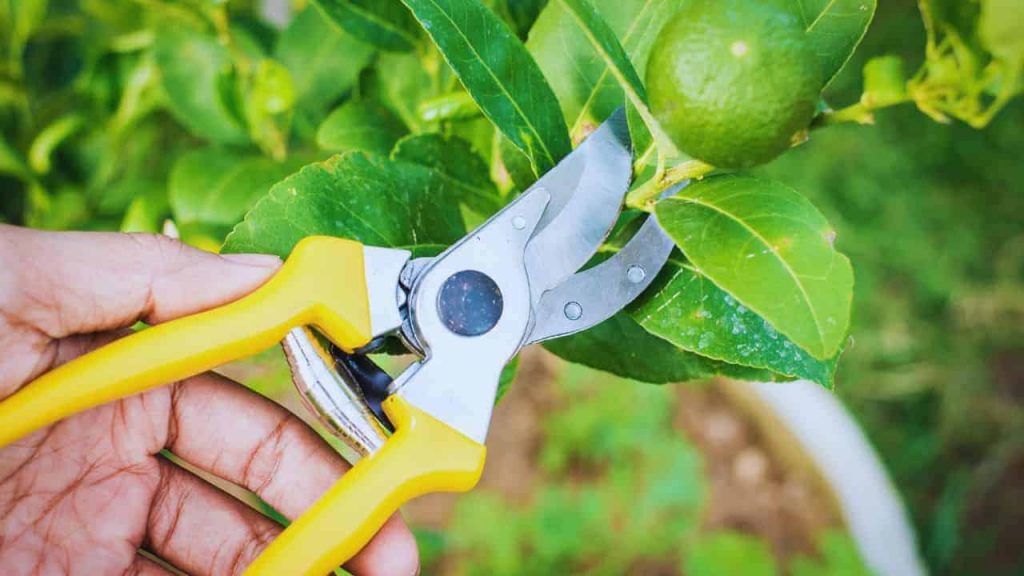
In late winter or early spring, shorten long, leggy shoots by about a third.
Aim for an open, goblet-shaped structure where light can reach the centre.
Pinch out soft growing tips during the season to encourage bushier side growth.
Remove any dead, damaged or crossing branches whenever you spot them.
If your lime is grafted, cut off any shoots that appear from below the graft union – these are from the rootstock, not the fruiting variety.
Pollination and Fruit Set Indoors
Most lime trees are self-fertile, so one tree can set fruit on its own – but indoor conditions sometimes need a helping hand.
When flowers open, gently shake the branches once a day, or
Use a soft paintbrush to move pollen from flower to flower.
Keep the tree away from strong draughts or very dry air while it’s in bloom.
If lots of tiny fruits form, the tree may naturally drop some. That’s normal – it’s just balancing what it can support.
Common Problems With Lime Trees (and How to Fix Them)
Yellow leaves
Often caused by:
Overwatering or poor drainage
Lack of nutrients (especially nitrogen or magnesium)
Cold draughts
Check the roots for sitting water, improve drainage if needed, and stick to a regular citrus feed. For detailed nutrient advice, the RHS lime growing guide is a good reference.
No flowers or fruit
Tree may be too young – grafted trees usually need 2–3 years.
Not enough light – move it to a brighter spot or add a grow light.
Over-pruning at the wrong time can cut off flower buds; stick to light structural pruning in late winter.
Pests: scale, aphids and spider mites
Check leaves (especially undersides) regularly for sticky residue, bumps or fine webbing.
Wash off mild infestations with warm soapy water and a soft cloth.
For heavier problems, an organic insecticidal soap or horticultural oil can help – always follow the label and test on a small area first.
FAQs About Growing Lime Trees Indoors
1. How long does it take for an indoor lime tree to produce fruit?
Grafted trees can start to flower and fruit within 2–4 years, sometimes sooner if conditions are excellent. Seed-grown trees may take many more years and aren’t guaranteed to match the parent plant.
2. Can I grow a lime tree from supermarket seeds?
You can, but it’s more of a fun experiment than a reliable way to get fruit. Seedlings may grow into tall, spiky trees that never fruit well. A grafted dwarf lime from a nursery is a much better option.
3. Should I move my lime tree outside in summer?
Yes, if you have a sheltered, sunny spot. Gradually introduce it to outdoor conditions over a week or two, and bring it back inside before chilly nights return.
4. Why are my lime tree’s leaves curling?
Curling leaves can be a sign of underwatering, hot dry air, or sap-sucking pests. Check soil moisture, increase humidity slightly, and inspect for aphids or mites.
5. Do I need to repot my lime tree every year?
Usually every 2–3 years is enough. When roots start circling the pot or poke out of the drainage holes, move up to the next pot size with fresh soil.
Final Thoughts on Growing Lime Trees Indoors
Growing your own lime tree inside is one of those projects that feels a bit magical – especially the first time you pick a fruit from a plant sitting in your living room. The best way to grow lime trees indoors is to give them strong light, free-draining soil, steady watering, and regular citrus feed, plus a little pruning and patience.
Start with a good dwarf variety, choose a generous pot, and keep an eye on temperature and pests. Over time, you’ll learn how your particular tree behaves through the seasons – and that’s when caring for it becomes second nature.
Related Articles
Ready to Grow a Mini Indoor Orchard?
Explore Dwarf Fruit Trees for Indoors
Once your lime tree is settled in, it’s hard not to want more citrus. From compact oranges to lemons and kumquats, dwarf fruit trees can turn a sunny corner into a tiny orchard. Take a look at Dwarf Fruit Trees for Indoors – A Complete Guide to compare varieties, pot sizes and care tips so you can choose the next fruit tree to add to your collection.