

If you want to regrow kitchen scraps indoors, the secret is choosing scraps that naturally re-sprout fast (stems, roots, and bulbs) and giving them bright light once they start growing. It’s one of the cheapest ways to get extra herbs and greens — and it’s genuinely beginner-friendly.
Quick answer: regrow kitchen scraps indoors
-
Start with spring onions, celery base, lettuce hearts, and suitable mint or basil stems.
-
Use water only for the first few days, then pot up for stronger regrowth.
-
Give bright light (windowsill or grow light) to prevent weak, pale growth.
-
Change water regularly to avoid smells and rot.
-
Don’t expect endless harvests — treat it as bonus growth, not full grocery replacement.
Do this first: Save the next spring onion root ends and place them in a small glass with just enough water to cover the roots.
If you want a simple lighting explanation for edible regrowth (so shoots don’t go thin), Best Lights for Indoor Gardening is a useful companion.
What regrows best indoors (and what usually doesn’t)
Before you start, it helps to know what’s realistic indoors.
Scraps that regrow reliably
-
spring onions / green onions
-
celery base
-
lettuce hearts (romaine, little gem types)
-
bok choy bases
-
suitable herb stems such as mint and basil
-
ginger pieces (not a “scrap” exactly, but easy to start)
Scraps that disappoint most people
-
potatoes (often rot indoors if conditions are wrong)
-
carrot tops (look pretty but don’t give new carrots)
-
onion bottoms (possible, but slow and can smell)

The simple regrow method (water first, then pot up)
Most regrowth starts in water, but staying in water too long is what causes weak growth and rot.
A simple rhythm:
- Start in a shallow jar with water covering only the roots/base
- Change the water every 1–2 days
- Once you see new growth and tiny roots, pot it up
- Grow it on in compost for stronger harvests
If you keep getting slimy water or a sour smell, it usually means the water level is too high or it’s not being changed often enough. If you want a proper diagnosis checklist for bad smells around pots and compost, Why Indoor Plant Soil Smells Bad (7 Causes + Fast Fixes) is helpful.
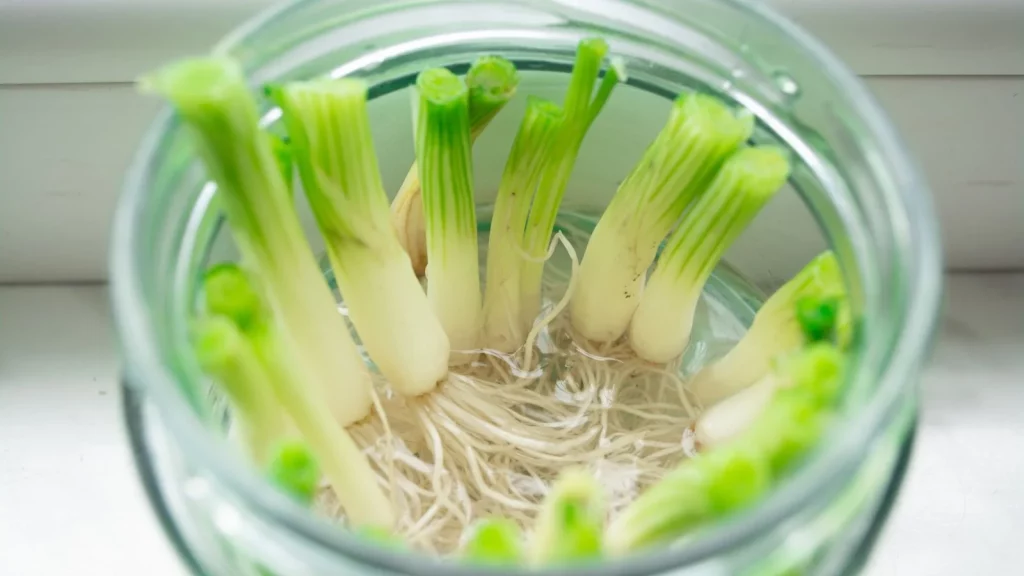
1) Regrow spring onions indoors (easiest win)
Spring onions are the classic beginner regrow because they respond fast.
How to do it
-
Cut the green tops, leaving 3–5 cm of white base with roots
-
Stand them in a glass with water just covering the roots
-
Change water every day or two
-
After a few days, pot them up for stronger long-term regrowth
Fast tip: once potted, treat them like a normal plant — light + steady watering.
2) Regrow lettuce indoors (quick “salad tops”)
Lettuce regrowth is best treated as a short bonus harvest.
How to do it
-
Keep the base (the firm heart end)
-
Place in a shallow dish with a little water
-
New leaves usually appear from the centre
-
Pot up if you want it to last longer
Don’t expect it to become a full new lettuce head indoors — the goal is extra leaves for sandwiches and salads.
3) Regrow celery indoors (slow but satisfying)
Celery is slower than spring onions, but it’s fun to watch.
How to do it
-
Keep the base (bottom 3–5 cm)
-
Stand in a shallow dish with a little water
-
New growth appears from the middle
-
Pot up once roots appear for better results
Celery needs decent light to avoid turning pale and weak.
4) Regrow bok choy and similar greens
Bok choy bases regrow well and look impressive quickly.
How to do it
-
Save the base and stand it in shallow water
-
Refresh the water often
-
Pot up once roots appear
This is one of the best “looks like it’s working” scraps because you see growth quickly.
5) Regrow suitable herbs from stems (mint and basil)
Mint and basil can root readily from healthy stem cuttings. Coriander and parsley are better started from seed rather than relying on cut kitchen stems to produce new plants.
Simple method
-
Take a healthy stem
-
Remove lower leaves
-
Place the stem in water (leaves above the waterline)
-
Once roots appear, pot up
If you’re regrowing herbs as a little indoor setup, Miniature Herb Garden Kitchen fits well as a companion read for small-space ideas.

6) Ginger “scraps” (the best long-term edible regrow)
Ginger isn’t always a scrap, but leftover pieces can sprout and become a long-term indoor plant.
If you want a full method (light, warmth, pot size), How to Grow Indoor Ginger is the most useful next read.
The biggest mistakes that make regrowth fail
Keeping scraps submerged
Most scraps only need the roots/base in water. Too much water = rot.
Leaving water unchanged
Stale water turns smelly fast and encourages bacteria.
Not enough light
Regrowth becomes pale and floppy without bright light.
Never potting up
Water regrowth is a starter stage. Compost is what gives proper growth.
If your pots stay wet for ages once you pot up, Improve Indoor Plant Drainage helps you avoid the “soggy compost stall”.
For indoor regrowing to work well, it helps to treat it like real growing: clean water, bright light, and then compost once roots form — and University of Minnesota Extension’s guidance on regrowing and propagating plants highlights that rooted cuttings perform best once transitioned into a suitable growing medium rather than staying in water long-term.
FAQs About Regrowing Kitchen Scraps Indoors
Do kitchen scraps regrow forever?
Usually no. Most give a few rounds of leaves, then slow down. Spring onions and some herbs last longer once potted.
Why do my scraps go slimy in water?
Too much water, not changing it often, or the container not being rinsed. Use shallow water and refresh it regularly.
Do you need sunlight to regrow scraps indoors?
You need bright light for strong growth. A windowsill is often enough for the starter stage, but potted regrowth needs more consistent light.
When should you pot scraps into soil?
Once you see new roots and steady leaf growth. Potting up is what makes it last.
Final Thoughts on Regrowing Kitchen Scraps Indoors
If you want quick wins, start with spring onions and lettuce hearts. For a longer-term onion crop rather than a few regrown leaves, follow the full guide to growing onions indoors; for other longer projects, pot up herbs and try ginger.Keep water shallow, change it often, and give strong light once shoots appear — that’s how regrowing scraps becomes a simple indoor routine instead of a slimy experiment.
Related Articles
Make regrowing scraps cleaner and more reliable
Turn Small Scraps into Repeat Harvests
Regrowing kitchen scraps indoors works best when you keep water fresh, give bright light, and pot up once roots form. A simple routine keeps regrowth stronger, cleaner, and less likely to rot.